
Here’s your chance to read the actual reviews and announcements of Lehmann’s Vienna years. Many thanks to Peter Clausen for his research! We begin with Julius Korngold’s review of the world premier of Frau ohne Schatten by Richard Strauss. Notice the detail with which he writes. And we offer some of Lehmann’s reports from her South American tour. From Die Bühne here are three reviews. At the bottom of this page are various reviews from Europe and the U.S.
-
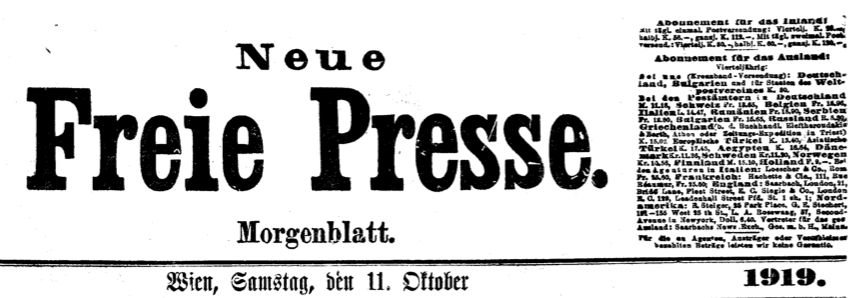
Top of Paper of 11 October 1919 World Premier of Frau ohne Schatten
-
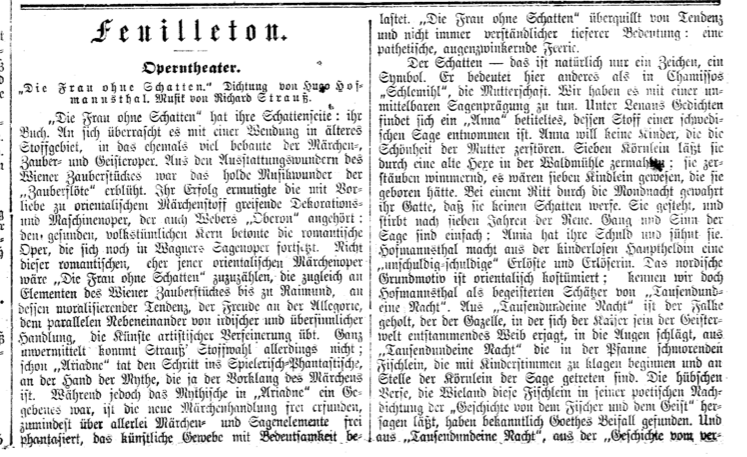
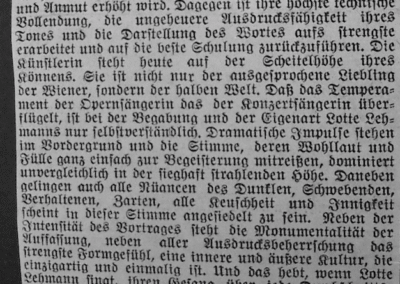
Beginning of Julius Korngold's review of Frau ohne Schatten
-
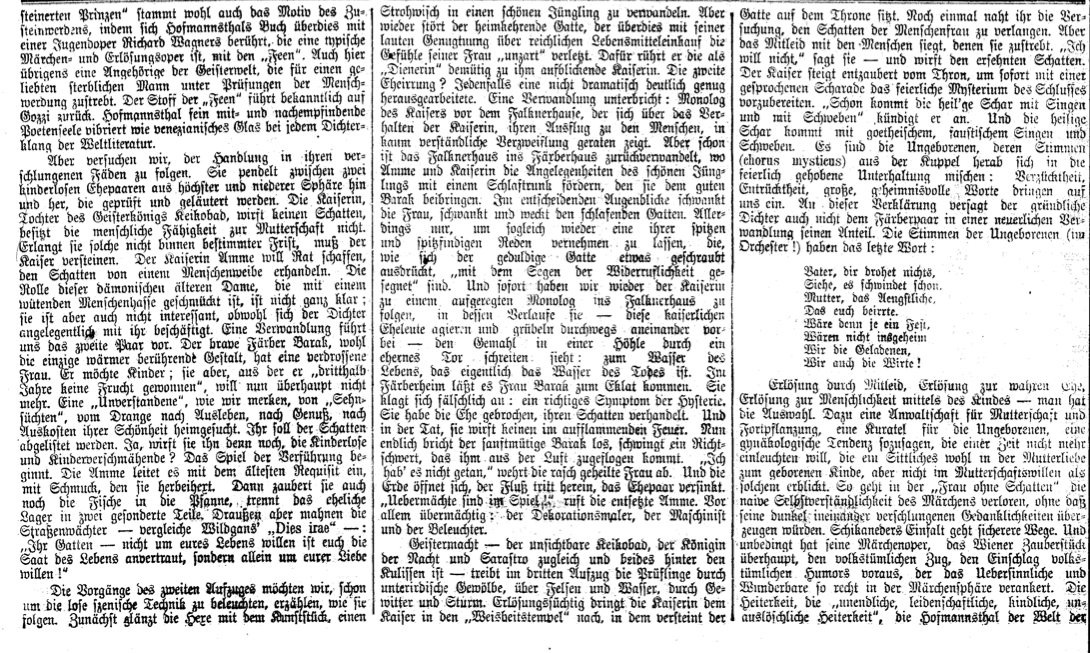
Second Page of Korngold's review of Frau ohne Schatten
-
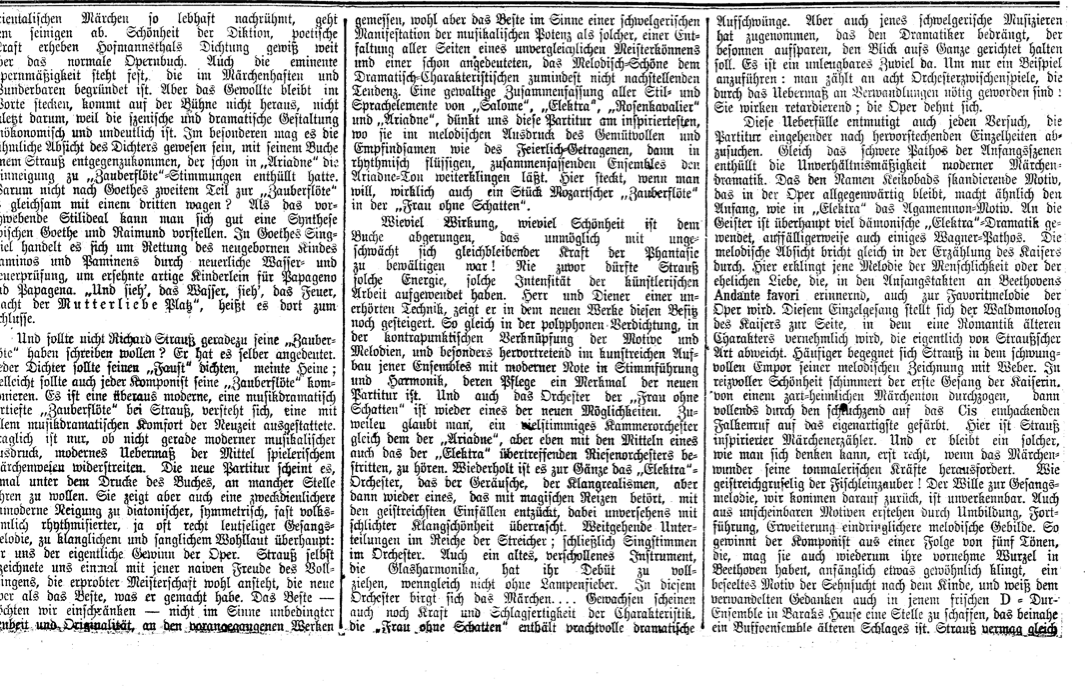
third page of Korngold's review of Frau ohne Schatten
-
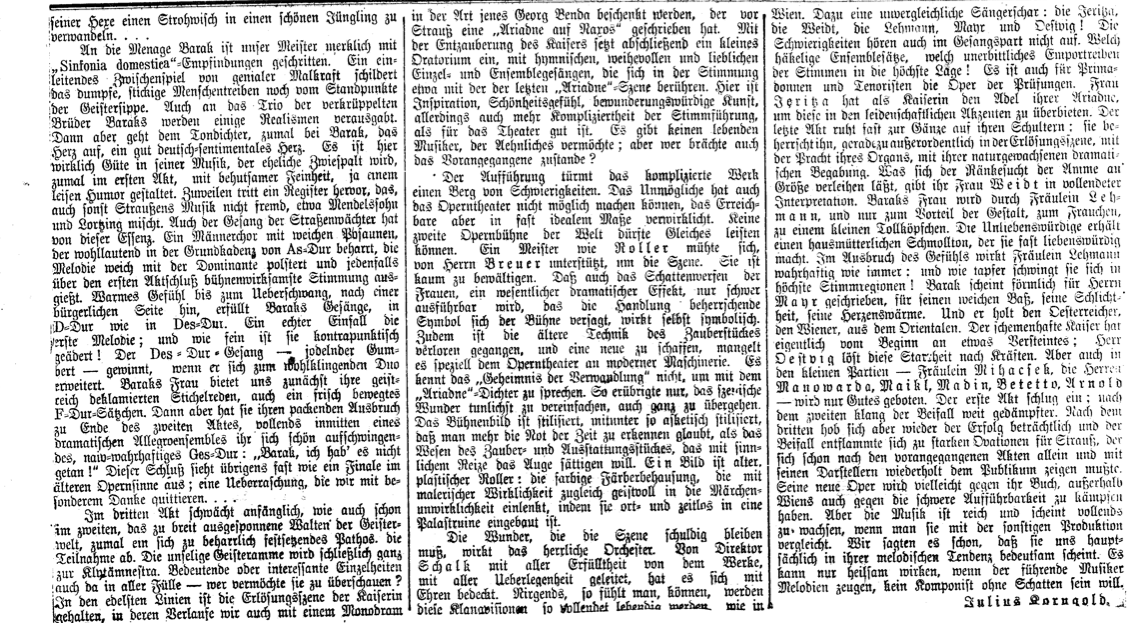
Fourth and final page of Korngold's review of Frau ohne Schatten
-
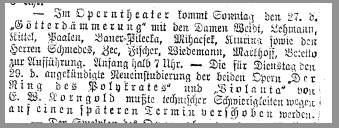
26 May 1919 Götterdämmerung
-
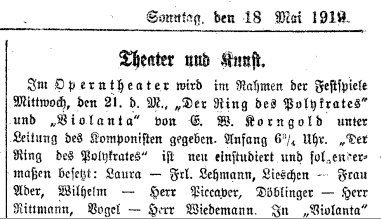
18 May 1919 Der Ring des Polykrates
-
19 May 1919 Recital
-
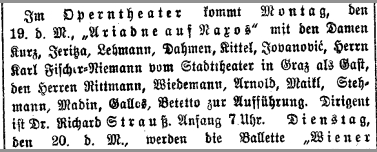
19. May 1919 Ariadne auf Naxos
-
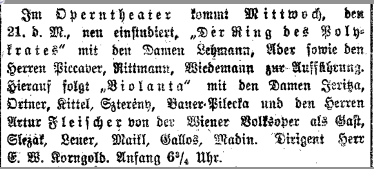
21 May 1919 Der Ring des Polykrates
-

23 May 1919 Die toten Augen
-
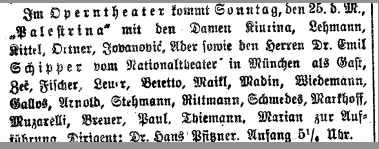
25 May 1919 Palestrina by Pfitzner with him conducting
-
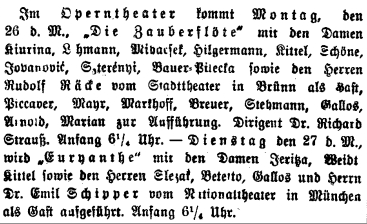
26 May 1919 Magic Flute cond. Strauss
-
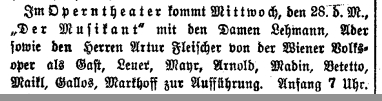
28 May 1919 Der Musikant by Bittner
-
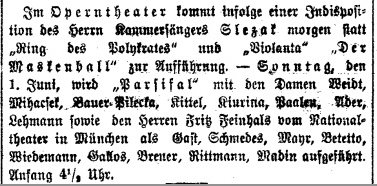
1 June 1919 Parsifal
-
-
-
-
-
-
-
-
-
-
-
-
-
-
-
-
-
-
-
-
-
-
-
-
-
-
-
-
-
-
-
-

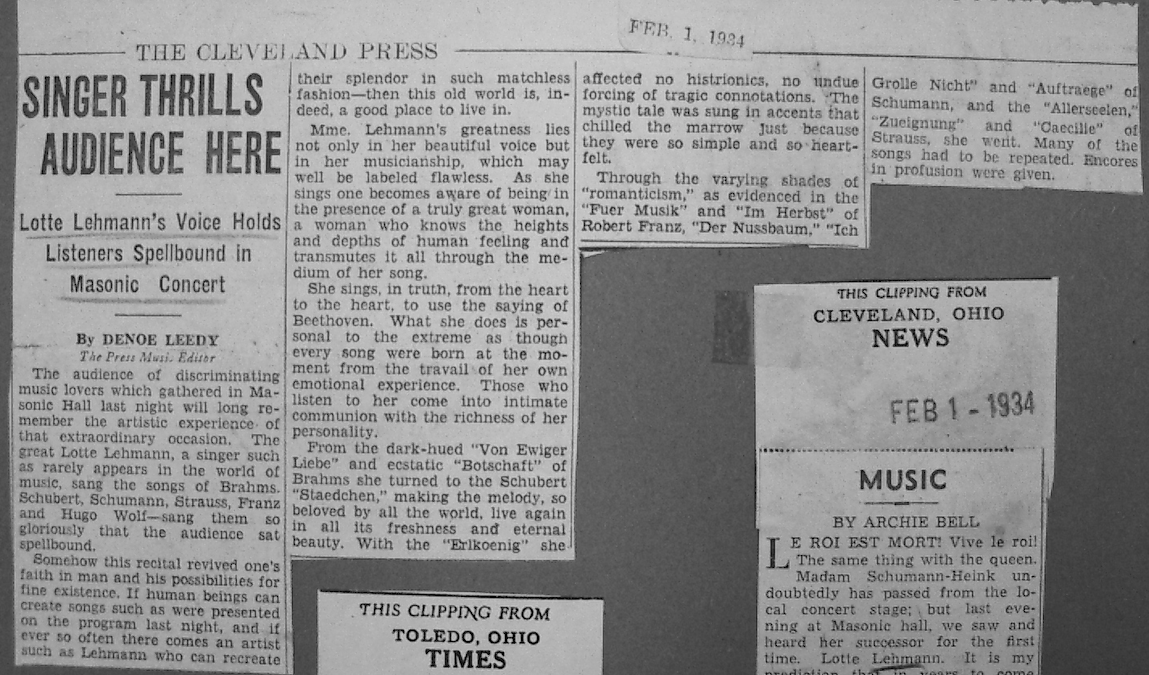
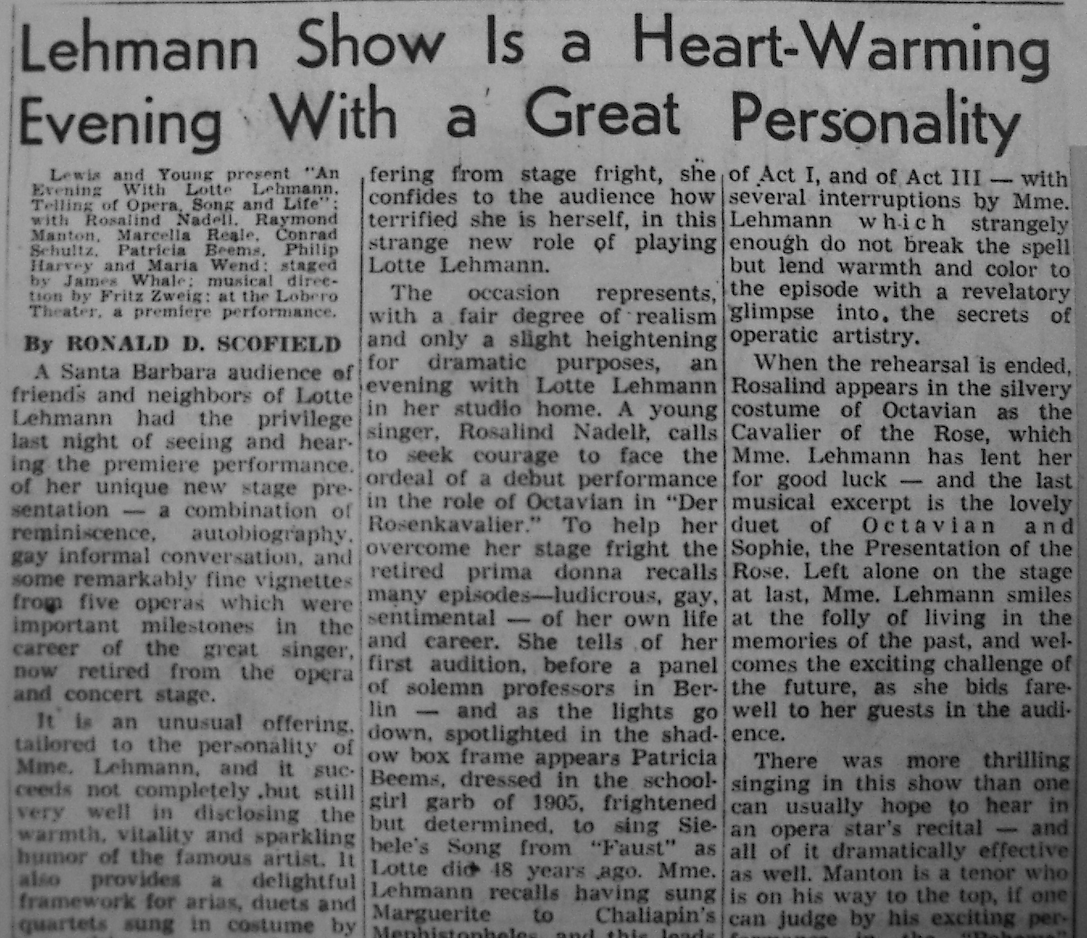
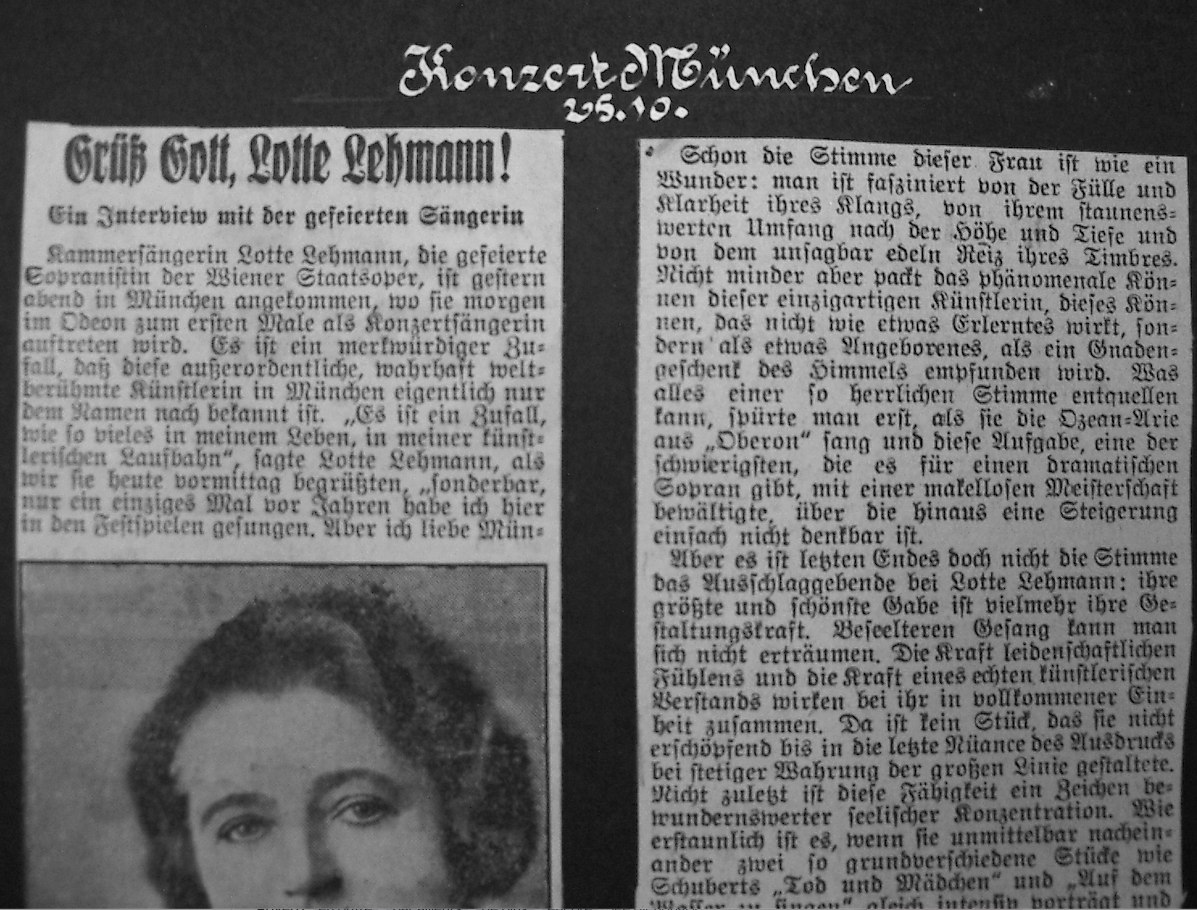
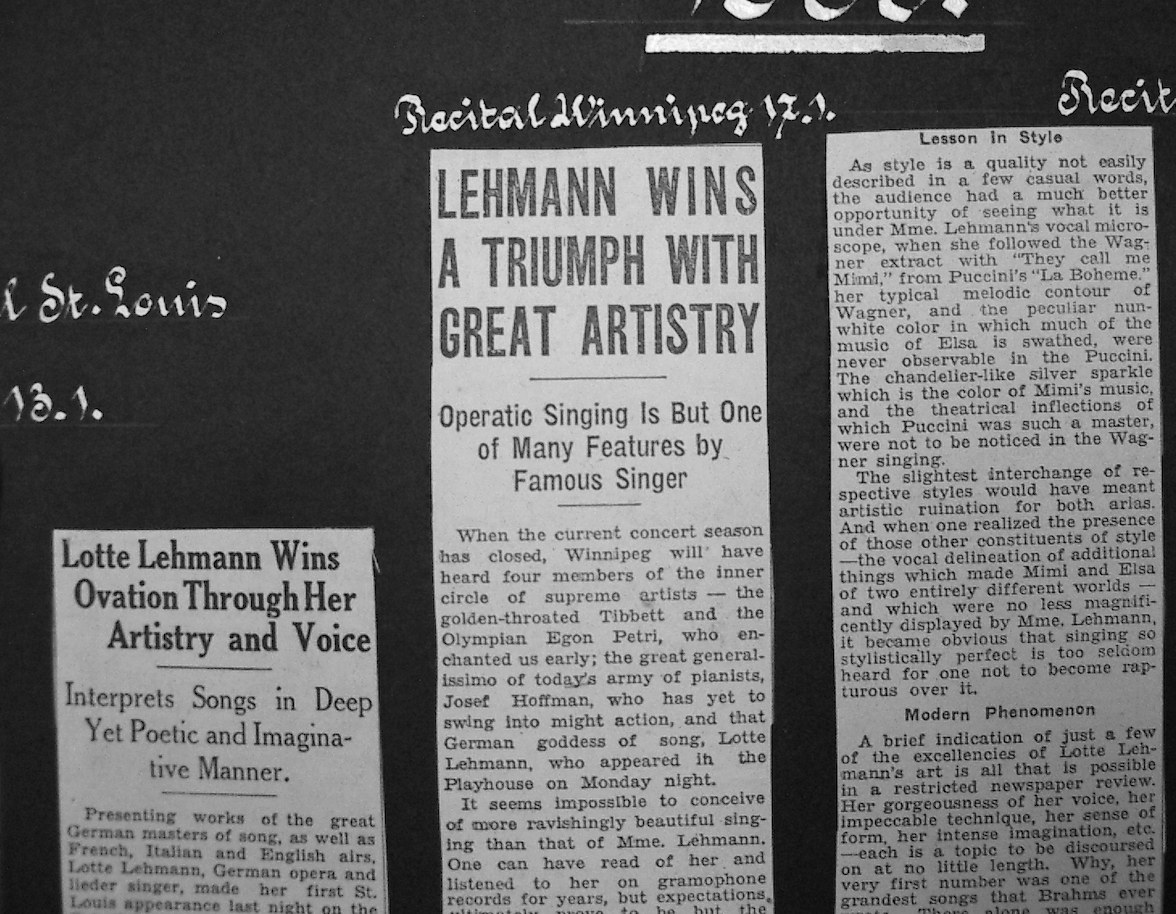
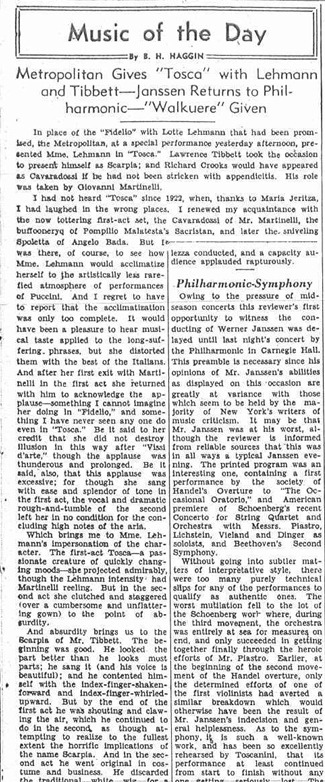
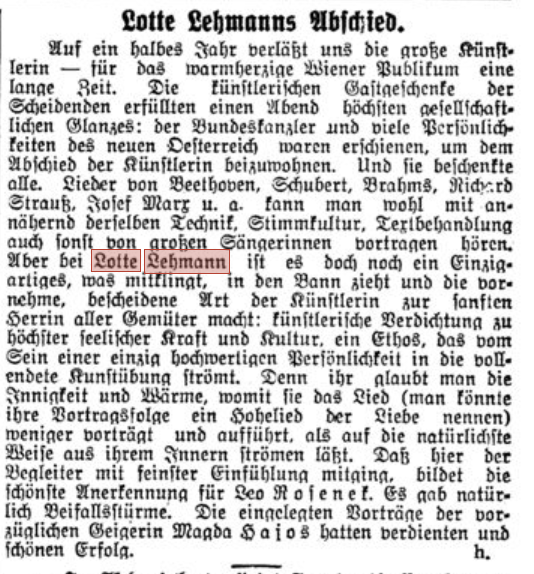
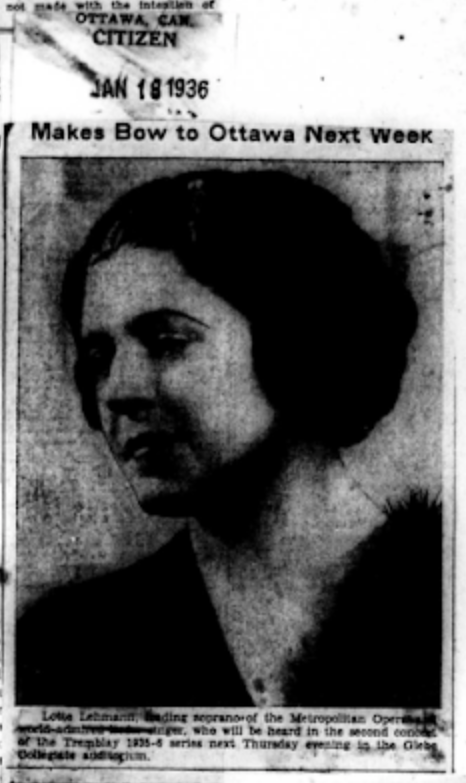
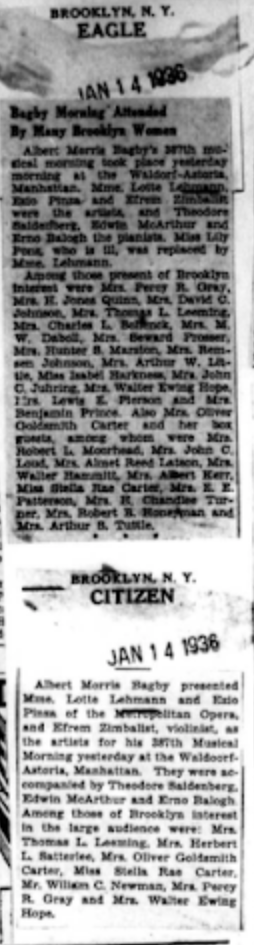
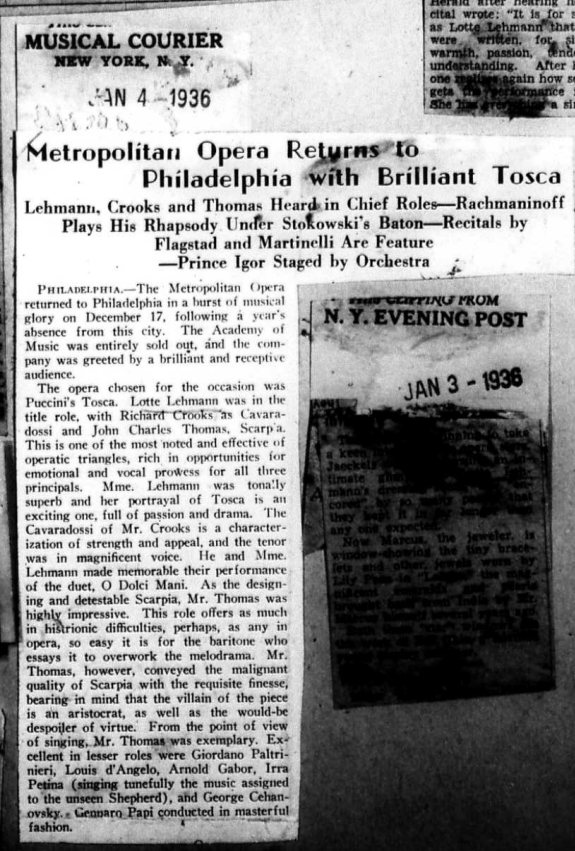

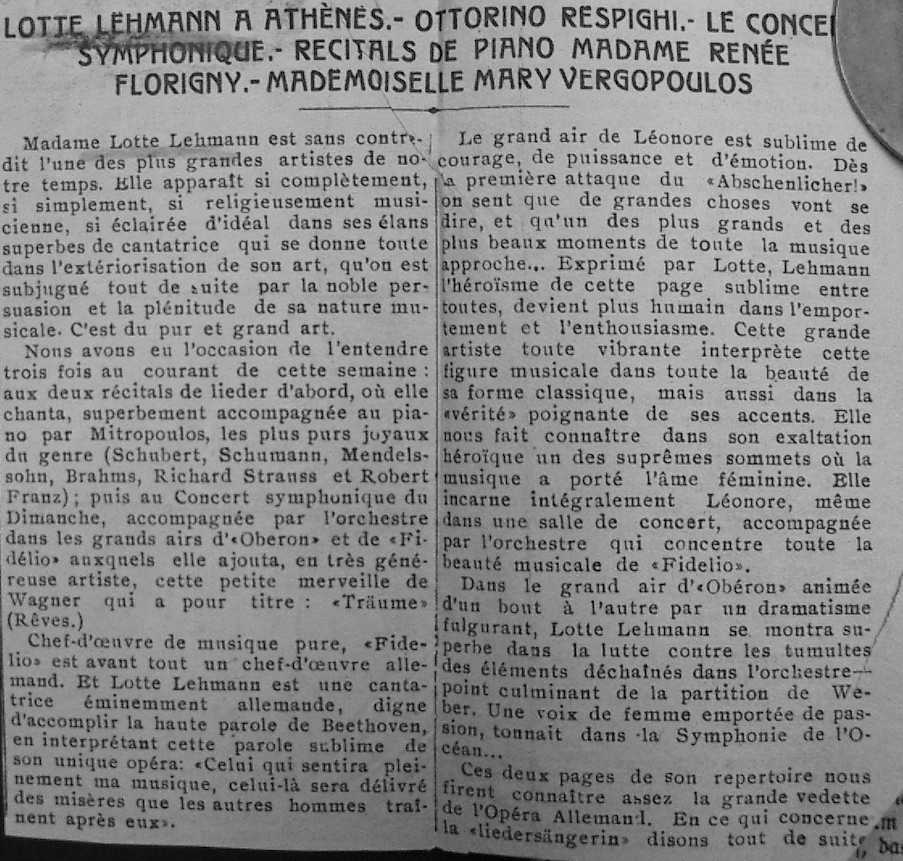
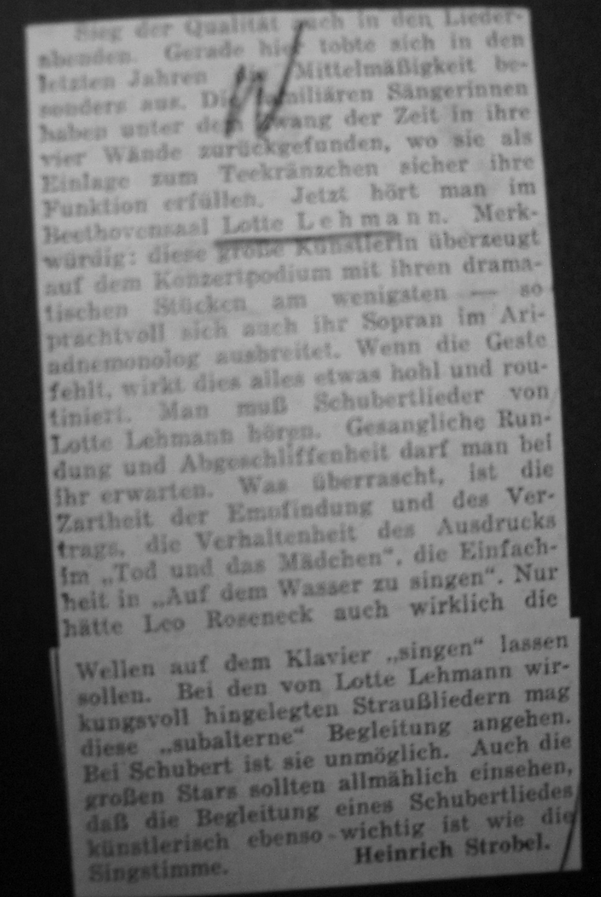
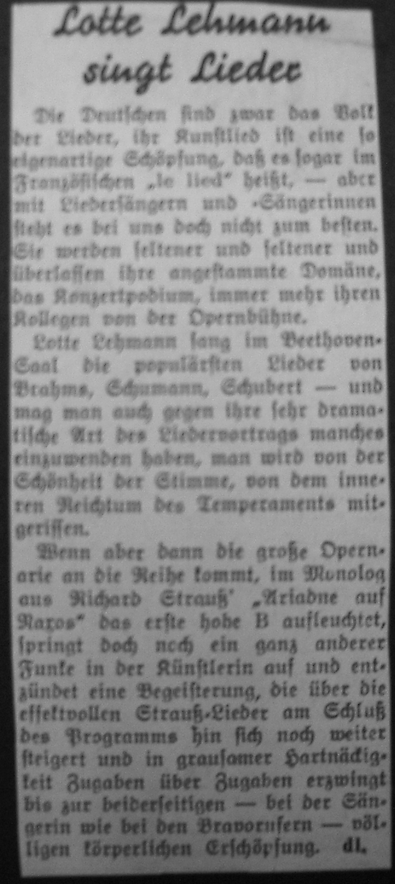
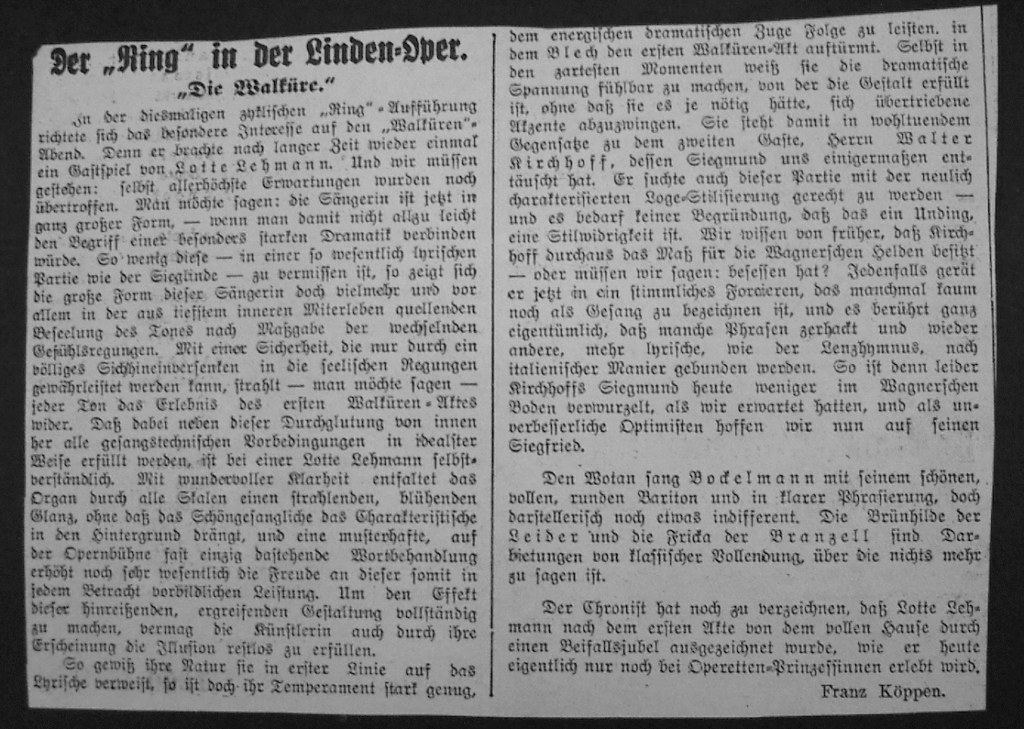
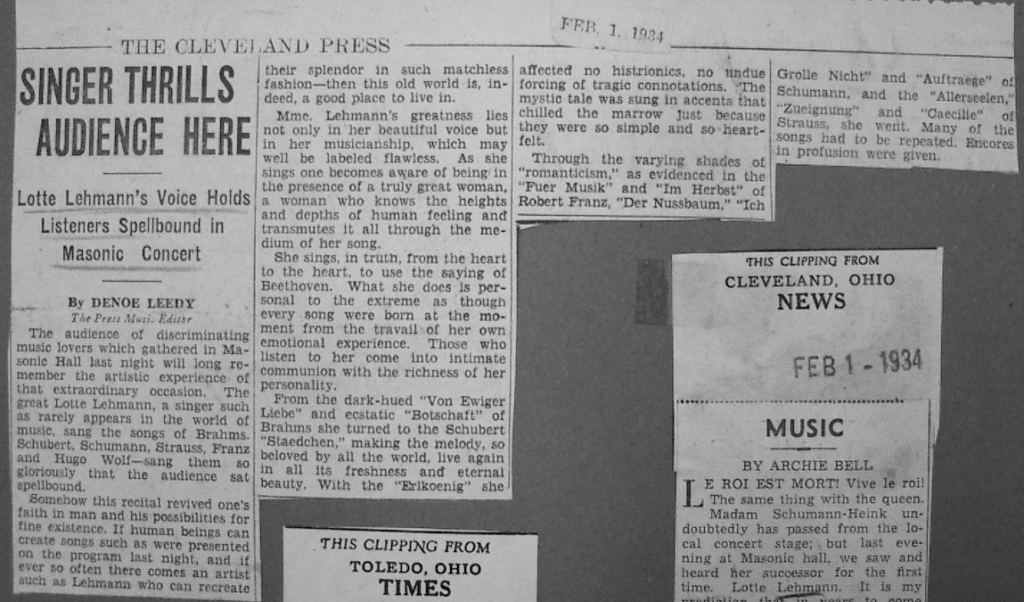
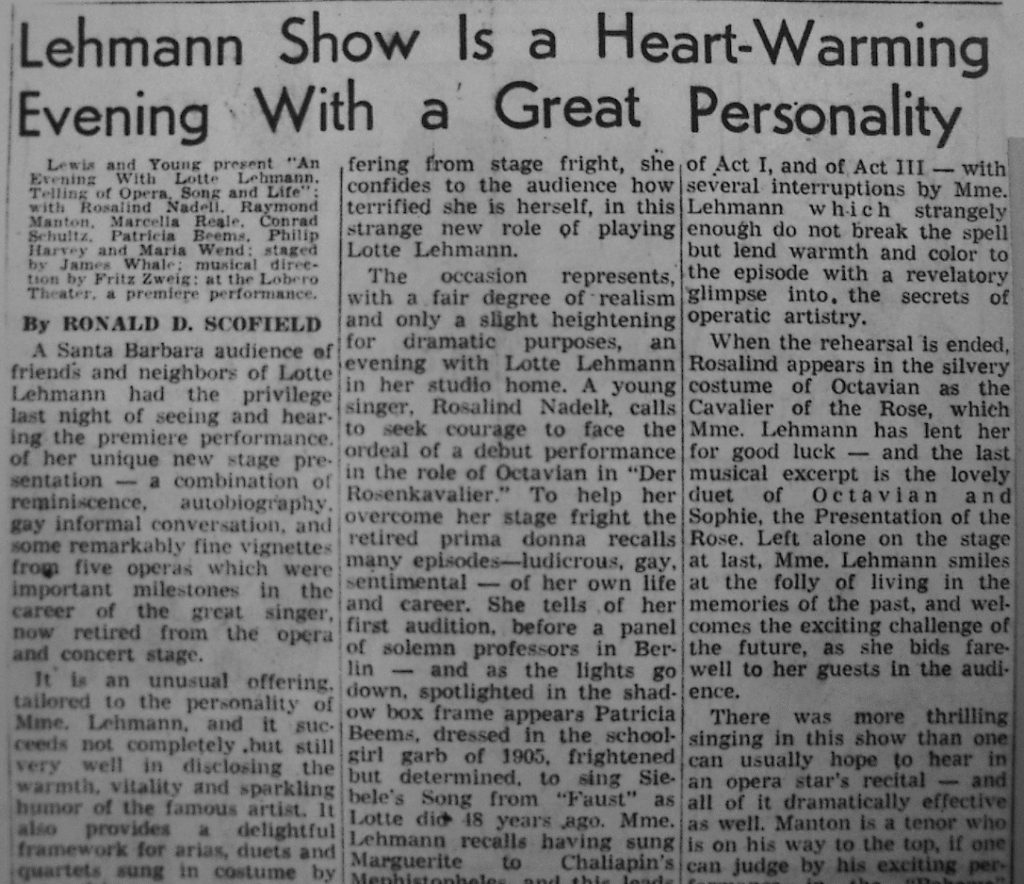
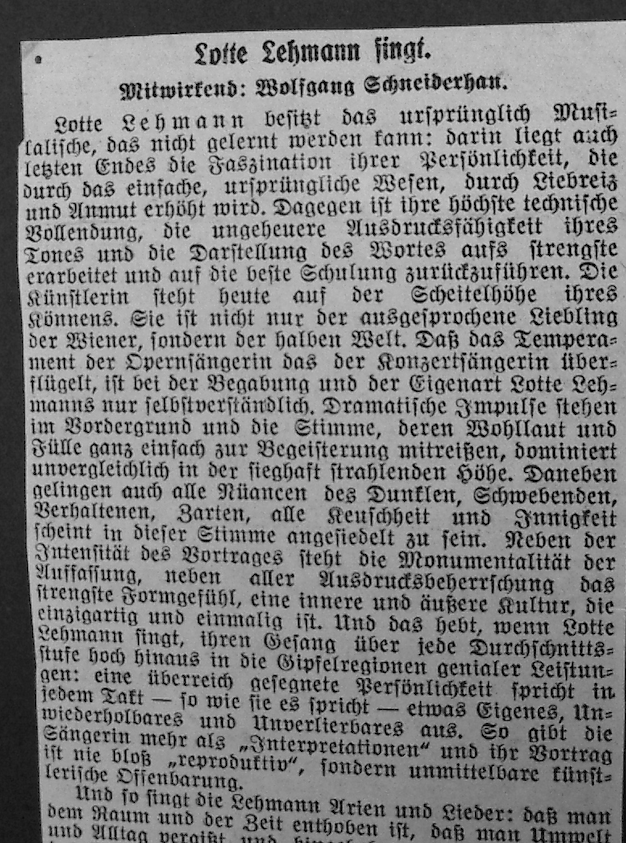
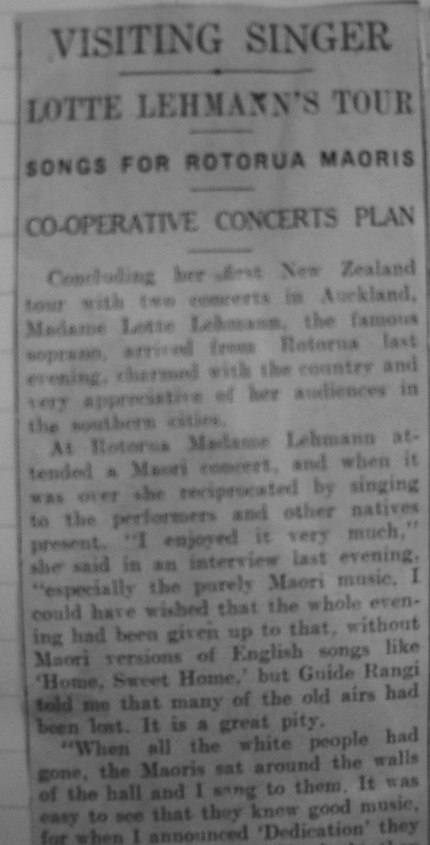
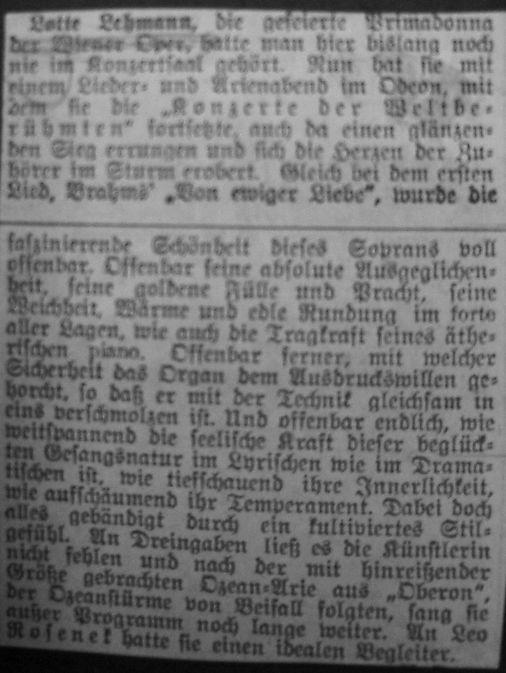
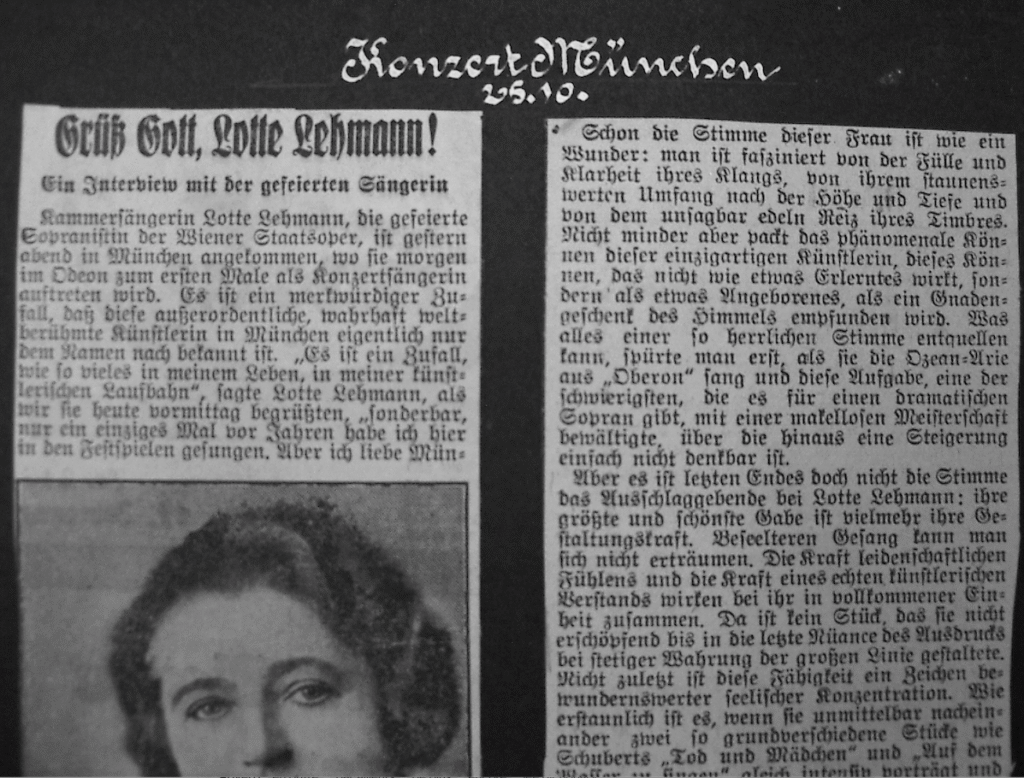
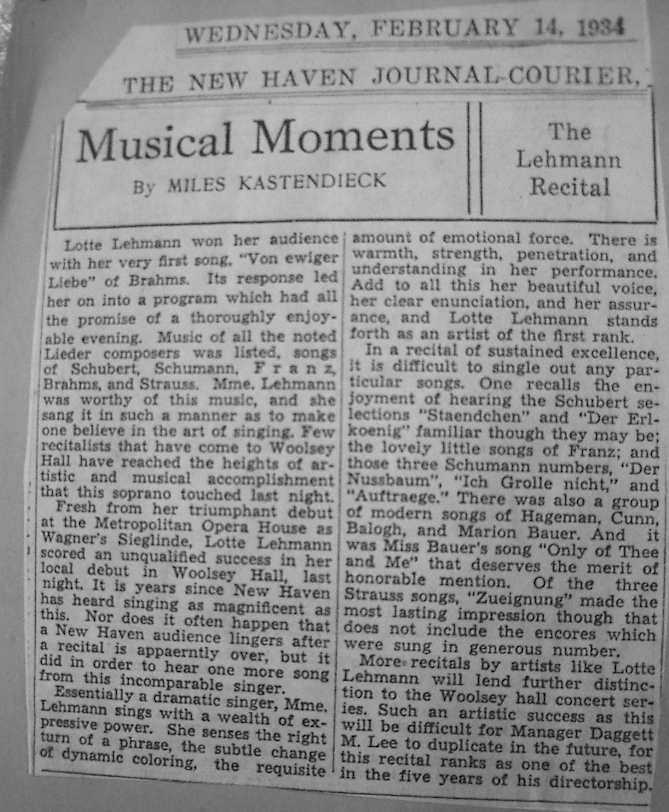
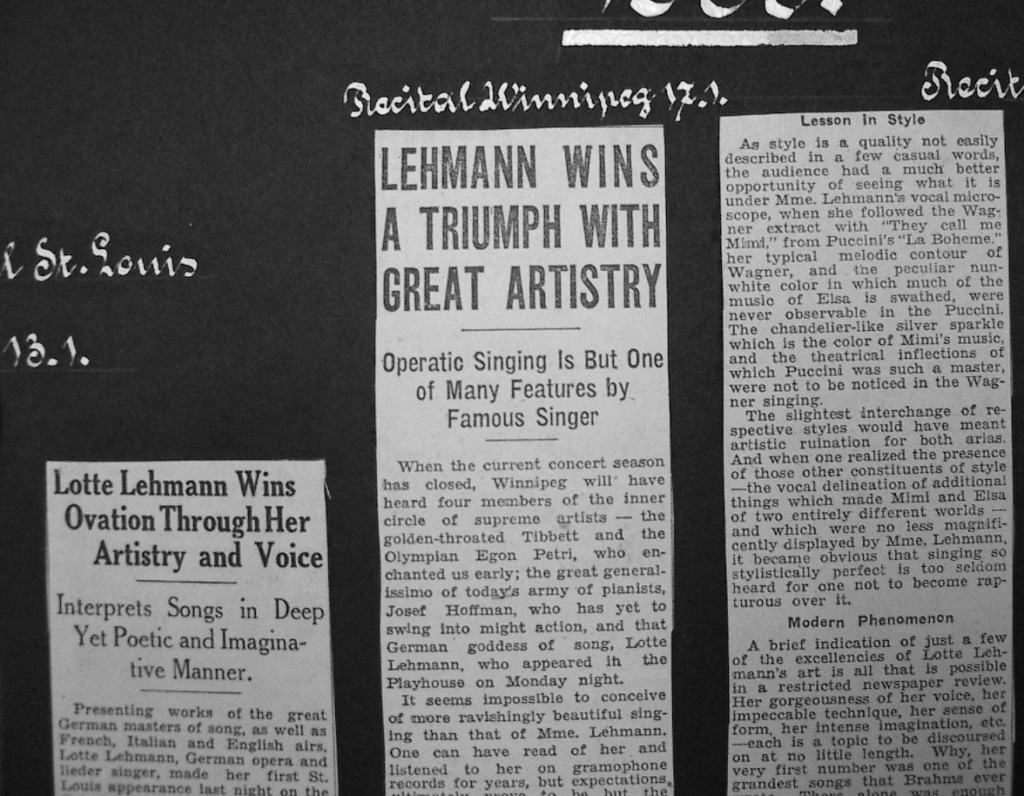
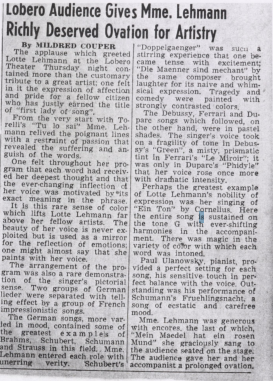
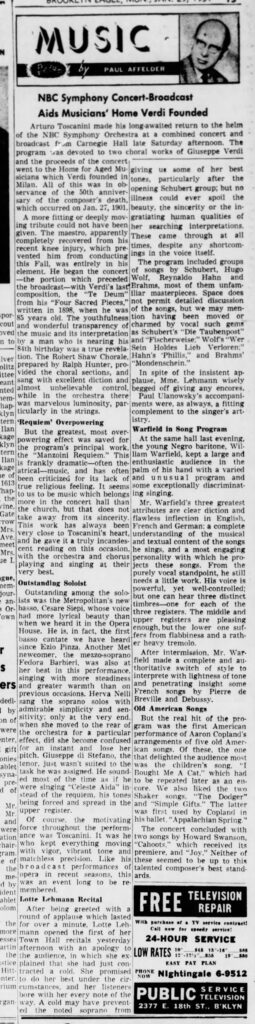
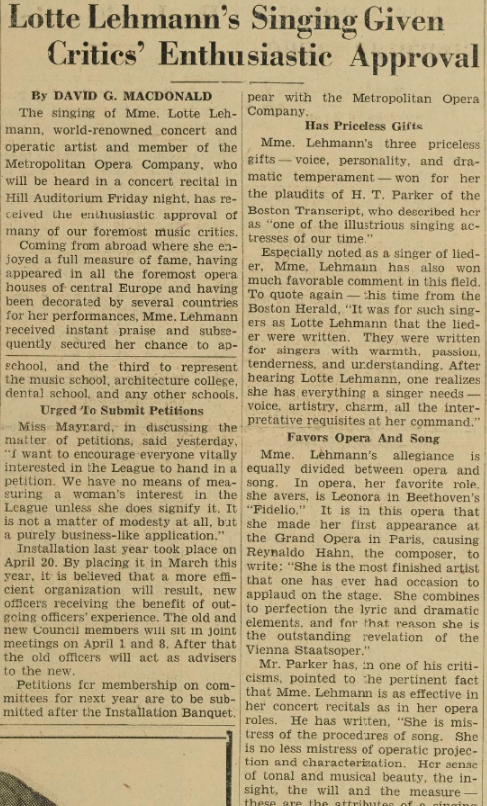
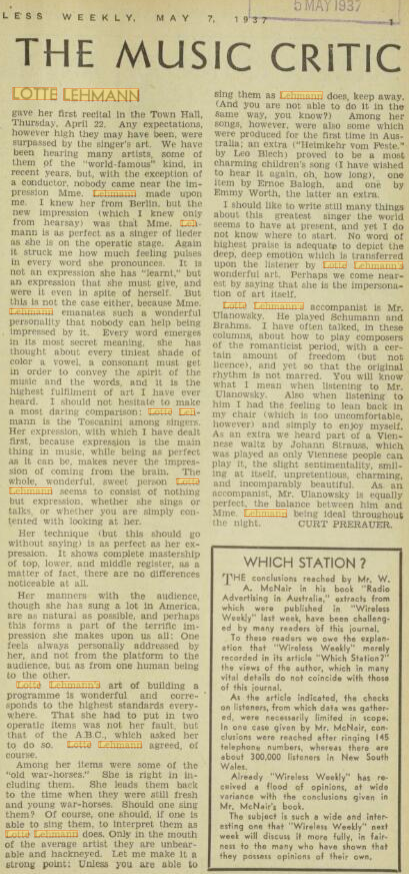
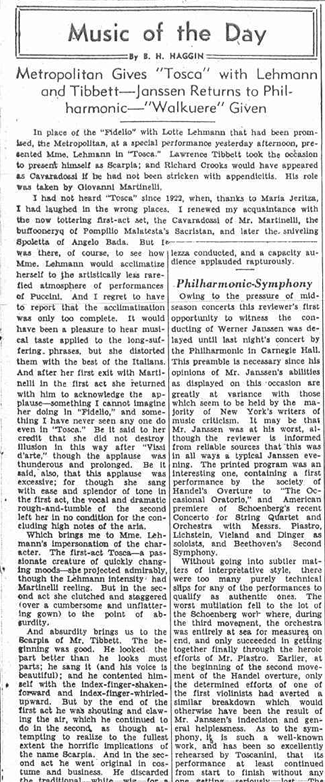
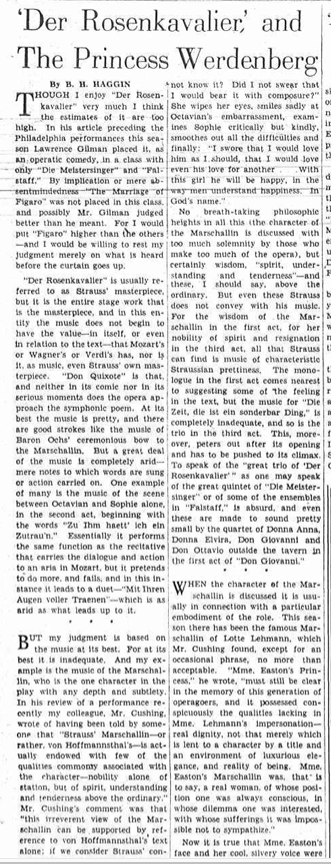
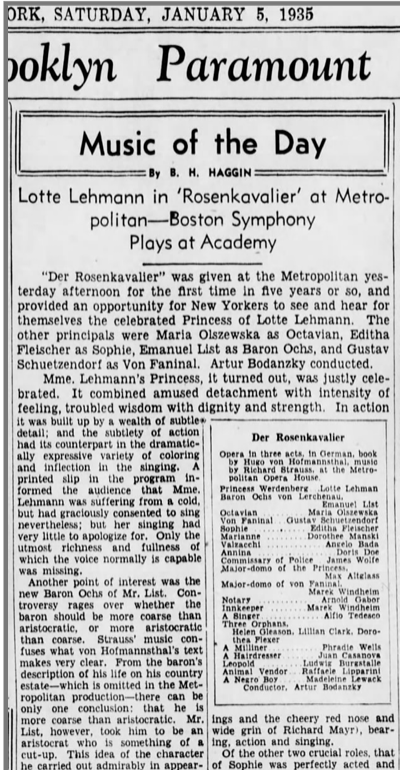
La Scala?
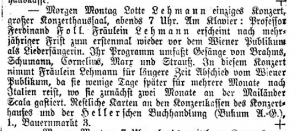
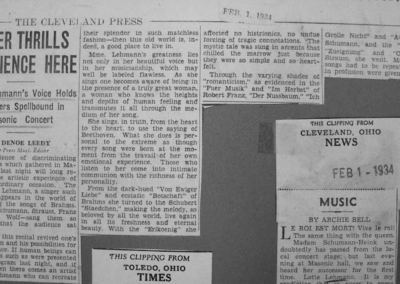
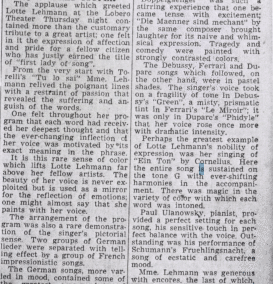
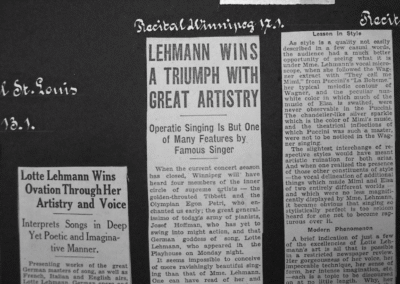
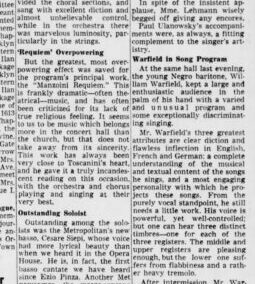
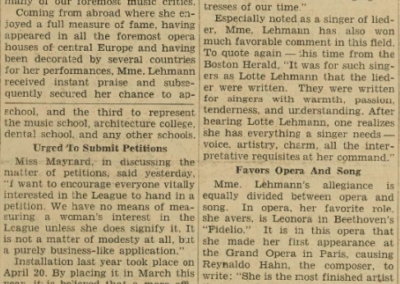
• You can’t believe everything you read. This appeared in the Neue Freie Presse of 20 January 1924. In English: Tomorrow (Monday) Lotte Lehmann‘s single concert [we’d call it a recital] at 7pm. At the piano: Professor Ferdinand Foll. Miss Lehmann appears as Lieder singer before the Vienna public for the first time in several years. Her program contains songs of Brahms, Schumann, Cornelius, Marx, and Strauss. In this concert, Miss Lehmann takes leave of the Vienna public for a longer period of time, because only a few days later she travels to Italy for several months, where she first appears as a guest singer for two months at La Scala, Milan. Remaining tickets…..The recital information is correct, but Lehmann didn’t sing on those dates at Italy’s La Scala. Rather, in this case, she traveled to Berlin, first to record on 13 February and then to sing opera there with Georg Szell, among other conductors at the Berlin Staatsoper, where she remained, making records and singing opera until 21 May 1924 the date she sang her first Marschallin in London under Bruno Walter’s direction. She continued singing opera (Ariadne auf Naxos, Der Rosenkavalier and Die Walküre), not returning to Vienna until the next season when on 9 September 1924 she sang in Faust. As usual, many thanks to Peter Clausen for the clipping. P.S. Lehmann did eventually sing a recital at La Scala, but in 1935.
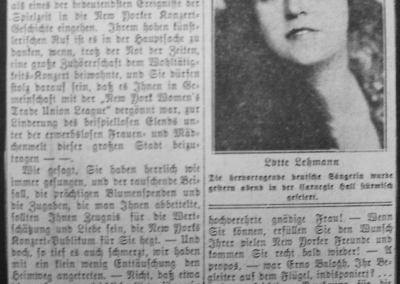
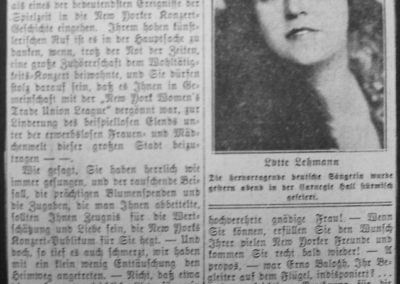
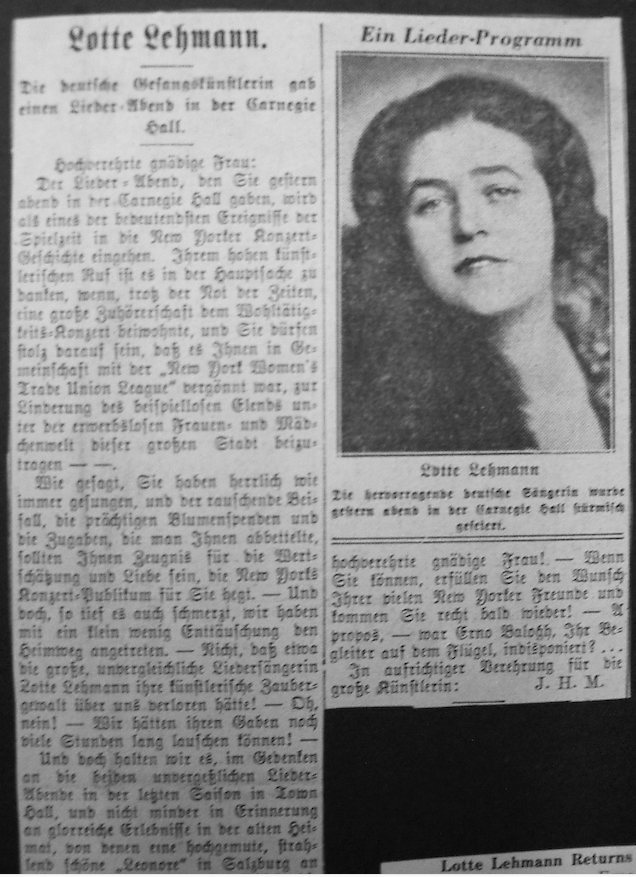
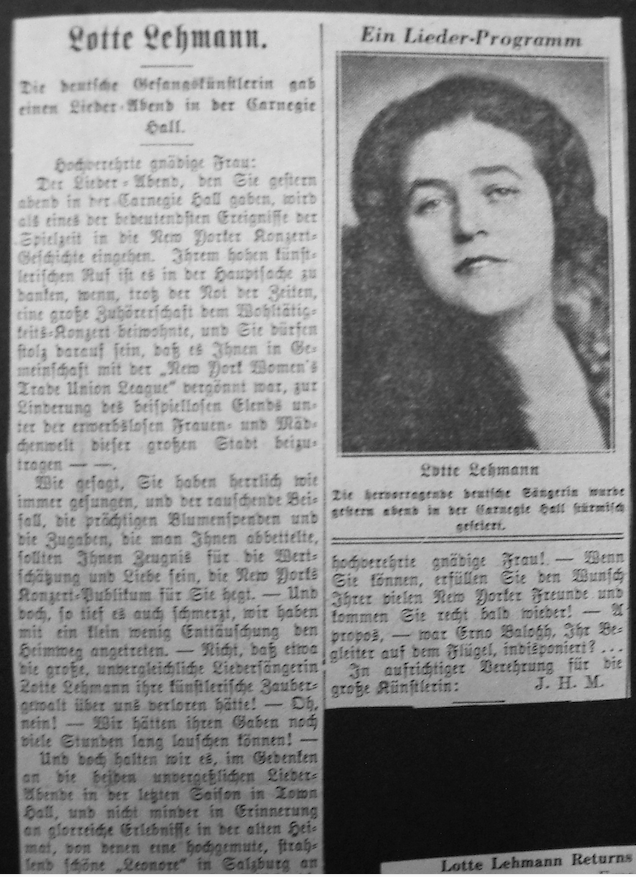
Carnegie Hall 1932
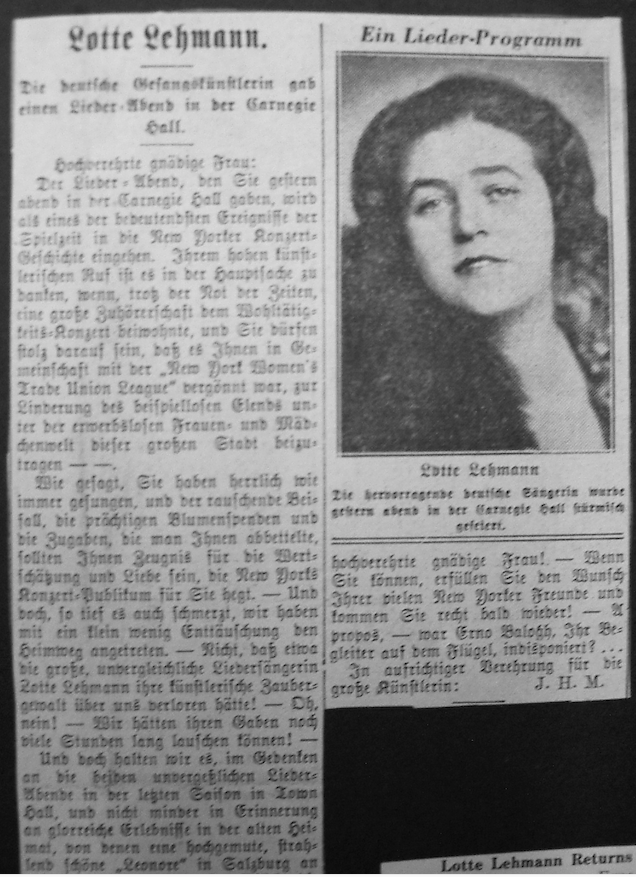
Lotte Lehmann.
[Under the Photo]: The outstanding German singer was tempestuously celebrated yesterday evening in Carnegie Hall.
The German vocal artist gave a song recital in Carnegie Hall.
Highly esteemed gracious lady: The song recital, which you gave yesterday evening in Carnegie Hall, will enter into New York concert history as one of the most significant events of the season.
It is chiefly thanks to your high artistic reputation that, despite the hardship of the times,[1932] a large audience attended the charity concert, and you may be proud that you, in partnership with the “New York Women’s Trade Union League,” were granted the opportunity to contribute to the alleviation of the unprecedented misery among the unemployed world of women and girls of this great city —
As said, you sang magnificently as always, and the thunderous applause, the splendid floral offerings, and the encores, which people begged from you, should be a testament to you of the appreciation and love that New York’s concert audience harbors for you. —
And yet, as deeply as it pains, we started our way home with a tiny bit of disappointment. —
Not that the great, incomparable song singer Lotte Lehmann had somehow lost her artistic magical power over us! — Oh, no! — We could have listened to your gifts for many hours more!
And yet we hold it, in memory of the two unforgettable song recitals in the last season in Town Hall, and no less in remembrance of glorious experiences in the old homeland, of which a high-spirited, radiantly beautiful “Leonore” in Salzburg […]*highly esteemed gracious Lady! — If you can, fulfill the wish of your many New York friends and come back very soon! —In sincere adoration for the great artist: J. H. M.
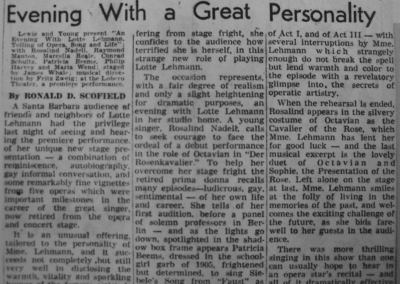
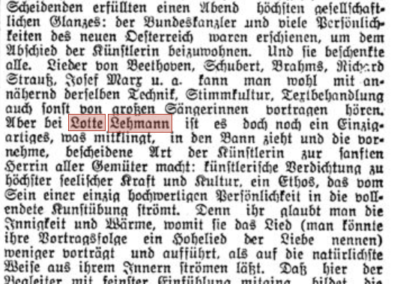
Last Salzburg Recital Review
Last Salzburg Recital Review
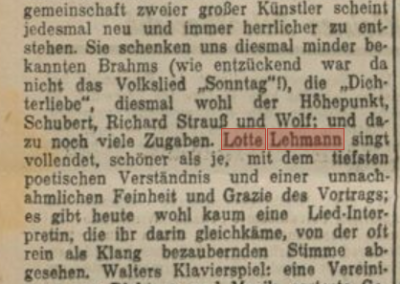
The writer didn’t know that this would be Lehmann’s last Salzburg Festival. You’ll find an English translation below.
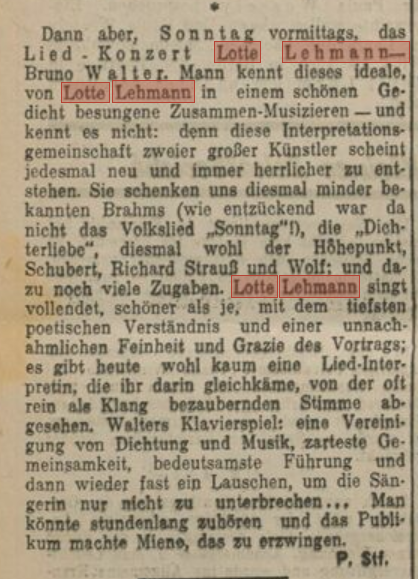
“But then, on Sunday morning, came the recital by Lotte Lehmann and Bruno Walter. One knows this ideal musical partnership, praised so beautifully in a poem by Lotte Lehmann—and yet one does not truly know it, for this interpretive collaboration between two great artists seems to arise anew each time, more glorious than ever. This time, they presented us with lesser-known works by Brahms (how delightful was the folk song ‘Sonntag’!), Schumann’s ‘Dichterliebe’ (likely the highlight this time), Schubert, Richard Strauss, and Wolf, along with numerous encores. Lotte Lehmann sings flawlessly, more beautifully than ever, with the deepest poetic understanding and an inimitable refinement and grace of delivery. Today, there is hardly a lieder singer who could equal her, quite apart from her voice, which is often enchanting purely as sound. Walter’s piano accompaniment was a union of poetry and music—the tenderest intimacy, meaningful guidance, and then again almost a listening, so as not to interrupt the singer… One could have listened for hours, and the audience looked ready to force exactly that.”
LL as Tatjana 1937
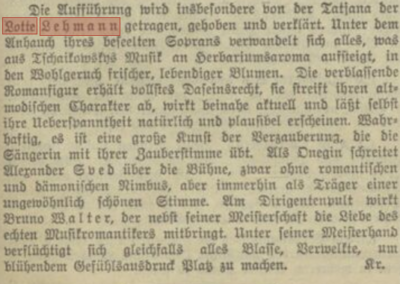
One doesn’t usually associate Lehmann with the lead role in Tchaikovsky’s Pique Dame. An English translation follows.
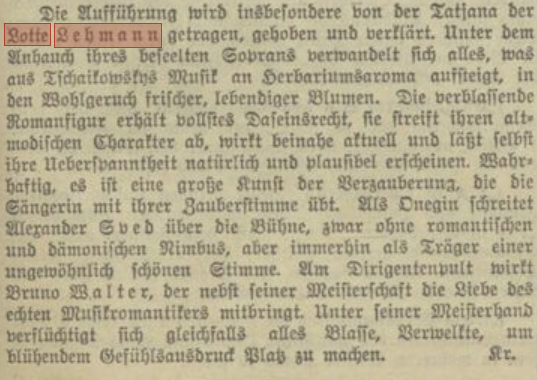
“The performance is carried, elevated, and transfigured in particular by the Tatyana of Lotte Lehmann. Under the breath of her soulful soprano, everything that rises from Tchaikovsky’s music as herbarium aroma transforms into the fragrance of fresh, living flowers. The fading novel character receives full right to exist, she sheds her old-fashioned character, appears almost current, and makes even her over-eccentricity seem natural and plausible. Truly, it is a great art of enchantment that the singer practices with her magic voice. As Onegin, Alexander Sved strides across the stage, albeit without a romantic and demonic nimbus, but still as the bearer of an unusually beautiful voice. At the conductor’s podium works Bruno Walter, who, alongside his mastery, brings along the love of a true musical romantic. Under his master hand, everything pale and withered likewise vanishes to make room for blossoming emotional expression.”
Review of Schumann Songs 1943
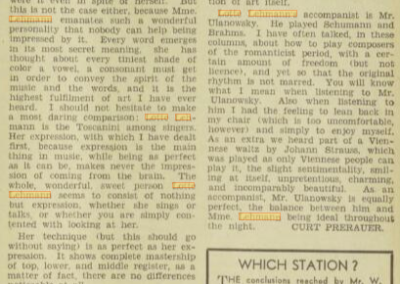
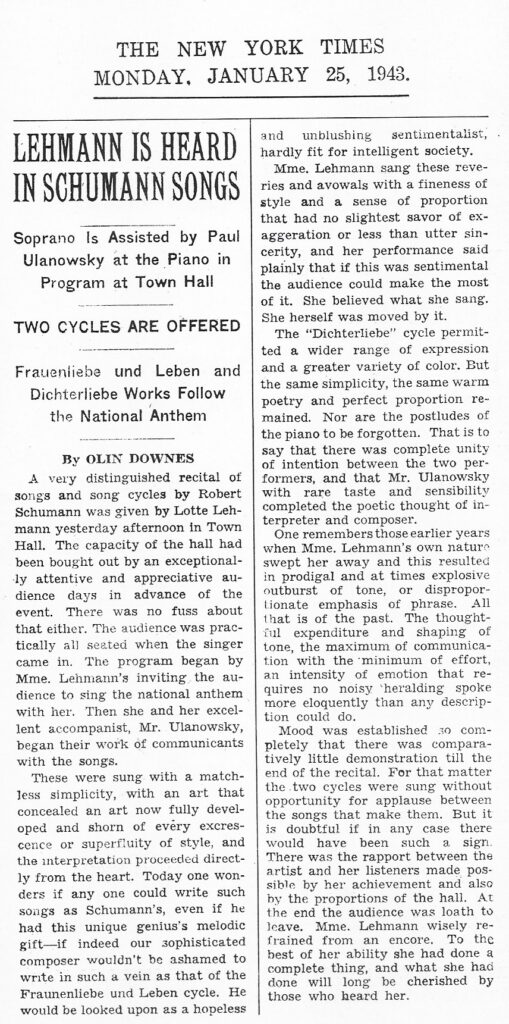
• The following review that speaks for itself has come to my attention. Take the time to read it through to understand the level of artistry that Lehmann had reached by 1943.
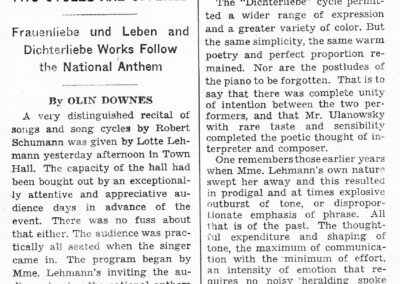
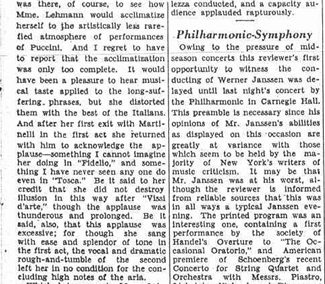
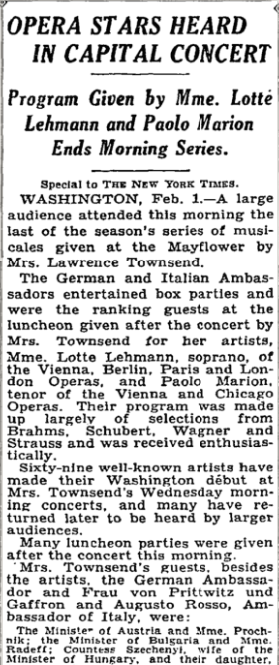
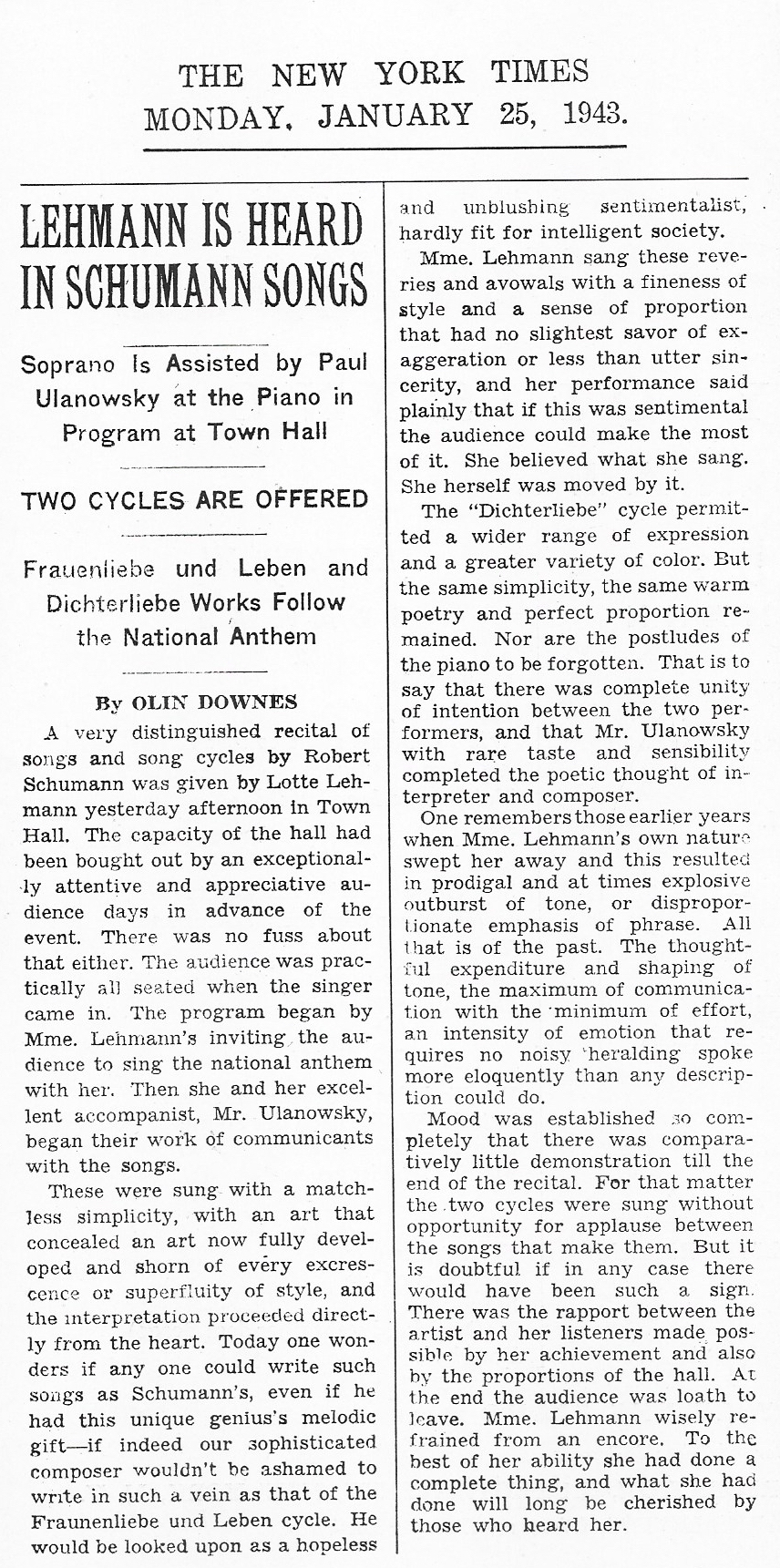
New York Times 25 January 1943
LEHMANN IS HEARD IN SCHUMANN SONGS
Soprano is assisted by Paul Ulanowsky in Program at Town Hall
By Olin Downes
A very distinguished recital of songs and song cycles by Robert Schumann was given by Lotte Lehmann yesterday afternoon in Town Hall. The capacity of the hall was brought out by an exceptionally attentive and appreciative audience days in advance of the event. There was no fuss about that either. The audience was practically all seated when the singer came in. The program began by Mme. Lehmann’s inviting the audience to sing the national anthem with her. Then she and her excellent accompanist, Paul Ulanowsky, began their task of communicants with the songs.
These were sung with a matchless simplicity, with an art that concealed an art now fully developed and shorn of every excrescence or superfluity of style, and the interpretation proceeded directly from the heart.
Mme. Lehmann sang these reveries and avowals with a fineness of style and a sense of proportion that had no slightest savor of exaggeration or less than utter sincerity, and her performance said plainly that if this was sentimental the audience could make the most of it. She believed what she sang. She herself was moved by it.
The “Dichterliebe” cycle permitted a wider range of expression and a greater variety of color. But the same simplicity, the same warm poetry and perfect proportion remained. Nor are the postludes of the piano to be forgotten. That is to say that there was complete unity of intention between the two performers, and that Mr. Ulanowsky with rare taste and sensibility completed the poetic thought of interpreter and composer.
One remembers those earlier years when Mme. Lehmann’s own nature swept her away and this resulted in prodigal and at time explosive outburst of tone, or disproportionate emphasis of phrase. All that is of the past. The thoughtful expenditure and shaping of tone, the maximum of communication with the minimum of effort, an intensity of emotion that requires no noisy heralding spoke more eloquently than any description could do.
Mood was established so completely that there was comparatively little demonstration till the end of the recital. For that matter the two cycles were sung without opportunity for applause between the songs that make them. But it is doubtful if in any case there would have been such a sign. There was the rapport between the artist and her listeners made possible by her achievement and also by the proportions of the hall. At the end the audience was loath to leave. Mme. Lehmann wisely refrained from an encore. To the best of her ability she had done a complete thing, and what she had done will long be cherished by those who heard her.
• From the Pariser Tagezeitung of 8 April 1938, Peter Petersen has sent the following article, which I translate: LOTTE LEHMANN SINGS NO MORE IN THE THIRD REICH; Lotte Lehmann, the great singer famous even at the Casino Theater in Desuville, who yesterday returned to America, stated the following to a French journalist: “No, I haven’t been driven from Germany. I am Arien and so is my husband.”
“Why are you leaving your homeland, you who just last year, was celebrated as no other artist, in Fidelio under the direction of Bruno Walter and Toscanini; you who give the artistic fame to the Vienna Opera and who experiences such triumphs from your too seldom Paris appearances?”
“Why? Because I don’t feel free in my homeland, because I can’t live freely and have the right to choose songs by Mendelssohn, Hugo Wolf or [Joseph] Marx. This is why I have left my homeland, but I have left freely…Certainly, nothing in the world is more important than freedom. Thus, I will seek American citizenship.”
Bad Reviews
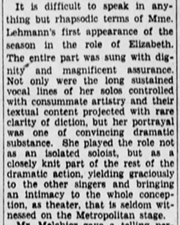
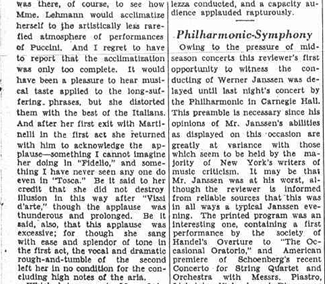
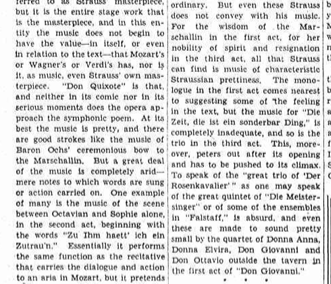
• In the various Lehmann biographies one can read glowing reviews of Lehmann’s performances. I’ve finally found one full of negative comments and a second one with mixed thoughts. These are English critics. The first, acknowledges Lehmann’s success at Covent Garden and the enthusiasm of the Queen’s Hall audience (probably of 25 Feb 1930), as well as the “insinuating beauty of her voice–perhaps the loveliest one has ever known” and “her quick and warm response to poetic suggestion.” Then he begins with his problems: “There was a streak of the maudlin in her programme that proved rather too much for a modern English audience. We accept nothing more gladly than German songs from Mme. Lehmann, for we know the sort of thing she excels in, but her scheme to-night would have been better for a little more spice. One or two Schubert songs, Brahms in one of his irascible moods, or some of the acid of Hugo Wolf would have made all the difference, and none of these masters was represented at all. Beethoven sounded a little meagre, though the two “Egmont” songs were an interesting revival, and Schumann was shown in his wan and tearful manner, except in the enthusiastic “Frühlingsnacht,” which surged magnificently to the singer’s most jubilant tones. It was this song one wanted to hear a second time, not the once incredibly overrated “Ich grolle nicht,” which nowadays seems not so much a song as a smear. For the Liszt songs there were two excuses–that they really represented the composer adequately, if unflatteringly, and that much of their cloying perfumery was made tolerable by the persuasive beauty of the singing.” Of the same performance another critic wrote, “Last night she really convinced a large audience that she is a brilliant exception to the general rule that opera singers are not at their best away from the stage. She does not sing Lieder as if they were dramatic scenes, but with her perfect feeling for curve and phrase she sings those German sentimental love songs that are so dear to the heart of the Teutonic maiden with a rare lyric eloquence. Her generous programme last night composed songs by Giordani, Monteverdi, Gluck, Beethoven, Liszt, Marx, and R. Strauss. Naturally certain songs in her list were more closely suited to her ability than others, but to them all she brought a clarity and precision of technique, an earnest approach, and a sensitive understanding which were matched only by the charm and spirit of her delivery.” He goes on to list the songs he likes and then: “…she was not quite so successful with the Beethoven group and she certainly should not sing ‘Freudvoll und Leidvoll’, [which the above critic praised!] which she screams at the top notes.”