
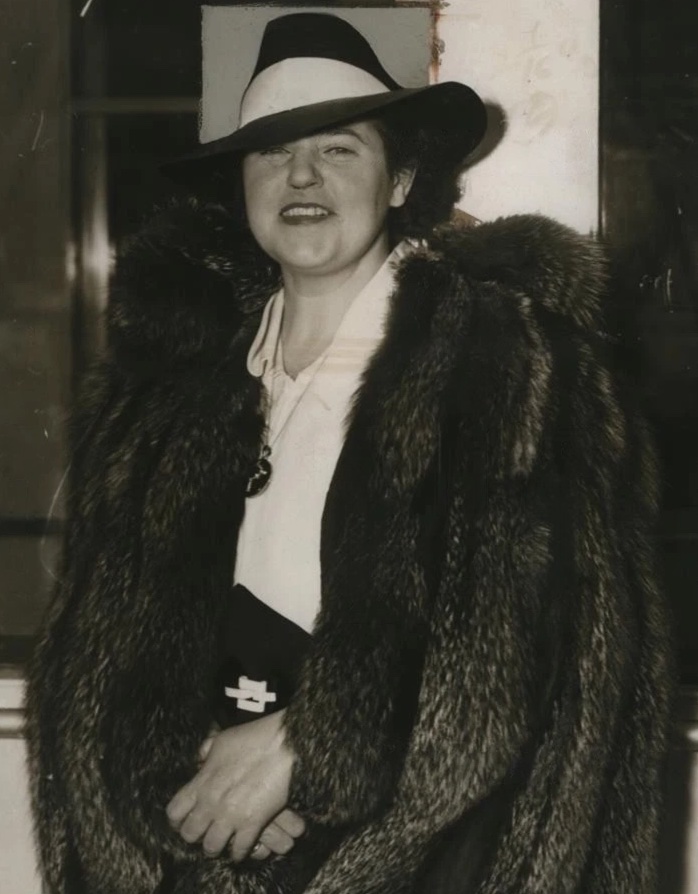
Lotte Lehmann fans even today are familiar with the infamous night she abandoned the first act of Der Rosenkavalier while singing her most celebrated role, the Marschallin on 4 May 1938. Numerous conflicting reports have emerged regarding both the cause and the ultimate outcome of the event. Examining this moment with historical distance and the benefit of contemporary archival access allows for greater clarity. The morning after the performance, international headlines in America, Austria, and Australia screamed: SOBBING DIVA FAINTS ON STAGE; DIVA STRICKEN WHILE SINGING; LOTTE SEASICK, COLLAPSES ON STAGE; HYSTERICAL, SHE STOPS OPERA; DIVA FLEES STAGE, NEAR COLLAPSE.
To understand the weight of the event, one must reconstruct the whole occasion: it was 4 May 1938, the opening night of the Covent Garden season, and the production was being broadcast live on BBC National Radio. As Lehmann biographer Beaumont Glass notes, “…just before the phrase, “als müsst’s so sein”…she cried out in English: ‘I can’t, I can’t!’ Then she raised her hands to her head, fled into the wings, and fainted.” Conversely, another Lehmann biographer, Alan Jefferson, who was listening to the live radio broadcast, recalls her speaking in German: “Kann nichts mehr – Schluss!” (“I can do no more – Finished!”)
In his Lehmann biography, Jefferson, enumerates the various contemporary explanations offered for her “abandonment of a performance in its course…”
1. Covent Garden’s official statement: ‘Mme Lehmann felt ill…’
2. Sir Milsom Ree’s diagnosis of a chill.
3. Lotte’s account of a terrible Atlantic crossing.
4. Lotte’s account of having just heard about her husband’s imprisonment and the destruction of their possessions in Vienna.
5. Lotte’s account of the cruel behavior of pro-Nazis in the cast.
6. Walter Legge’s account: ‘…a few minutes before the performance she had been told that relations of hers who were trying to smuggle valuables out of Austria had been held up at the customs…’”
Beyond these immediate stresses, historian Michael Kater, author of Never Sang for Hitler: The Life and Times of Lotte Lehmann, underscores the direct trauma the Anschluss had on Lehmann. “Her situation in the old German Reich already precarious, she felt uncertain with regard to her assets in annexed Vienna…her house,….her status of having fallen out with Göring, and the future of her Austrian pension, to say nothing of her brother Fritz’s continued presence in… [Vienna].”
Months after the collapse, upon her permanent return to the United States, Lehmann sought to clarify the narrative herself. The New York Times on 11 August 1938, quoted her directly: “It was really nervous exhaustion that caused me to faint…”
To trace the trajectory of this collapse, the analysis must begin weeks before Lehmann ever departed New York for London, evaluating both her rigorous itinerary and potential vocal limitations. And remember that Lehmann had proven herself extraordinarily stalwart in 1934, when she sang the Vienna premier of Arabella on the day after her mother had died.
Let’s begin this analysis months before Lehmann left New York for London, because there are possible vocal limitations that may have played a role in the fateful night.
3, 4 Mar 1938 LL: Concert: Philharmonic Hall, Los Angeles, CA; opera arias and Lieder; Klemperer, cond., Los Angeles Philharmonic; Mozart: Marriage of Figaro: Porgi amor; Dove sono; Wagner: Tannhäuser: Dich, teure Halle; Die Walküre: Du bist der Lenz; Schubert: An die Musik; Der Erlkönig (both orchestrated); (Mozart probably sung in German.)
7 Mar 1938 LL: Recital: probably Academy of Music, Roanoke, VA; Ernö Balogh, piano; “huge audience” of roughly 2,500 which had “seldom been so universally happy”; some critics observed that she was no longer in her “youthful vocal estate,” they praised her performance for its exceptional “good taste” and profound “generosity of spirit.”
[11-13 Mar 1938 Nazi Anschluss of Austria]
15 Mar 1938 LL: Joint Recital with Melchior: Mosque Theater (now the Newark Symphony Hall) Newark, NJ; Paul Ulanowsky, piano;
Schumann: duets; Wagner: Die Walküre: end of Act I from “Winterstürme.”
17 Mar 1938 Wedding of her publicist, Constance Hope; Lehmann sang Eugen Hildach’s “Wo du hingehst,” and with Melchior, Wagner’s duet from Tristan und Isolde; other guests included Leopold Godowsky, Lily Pons, and Emanuel List.
27 Mar 1938 LL: Recital (Benefit) under the “Auspices of the Central Synagogue Sisterhood” Town Hall, New York; Paul Ulanowsky, piano; Schubert: An die Musik; Der Doppelgänger; Du bist die Ruh’; Der Erlkönig; Schumann: Die Lotosblume; Schöne Wiege meiner Leiden; Der Nussbaum; Er ist’s (repeated); Frühlingsnacht; Hageman: Do not go my love; Carpenter: The Sleep which flits on Baby’s Eyes; Worth: The Little God in the Garden; Hageman: At the Well; Wolf: Blumengruß; An die Geliebte; In dem Schatten…; Strauss: Morgen; Heimliche Aufforderung; encores: Schubert: Ständchen; Schumann: Widmung; Brahms: O liebliche Wangen; Willam James: Haunted Garden
31 Mar 1938 Der Rosenkavalier; LL, Marschallin; Metropolitan Opera; same cast as 1 Dec 1937, except: Grete Stückgold, Octavian; Farell, Sophie; Metropolitan on tour in Boston
1 Apr 1938 LL: Recital: Upsala College Gymnasium, East Orange, NJ, for the Orange Community Concert Association; Paul Ulanowsky, piano; Partial list: Schubert: An die Musik; Schumann: Alte Laute; Er ist’s; Hageman: Do not go, my love; Strauss: Zueignung; The reviewer noted that Lehmann “spoke the titles of her songs in English” before singing them.
3 Apr 1938 LL: Radio Broadcast; RCA Magic Key; Tosca: Vissi d’arte; Strauss: Zueignung; Traum durch die Dämmerung; Schubert: Ständchen; Brahms: Das Mädchen spricht; Schubert: Wiegenlied; Pfitzner: Gretel; Paul Ulanowsky, piano; Black, cond., NBC Orchestra
5 Apr 1938 LL: Recital: Community Concert Series; War Memorial Building (now Trenton War Memorial), Trenton, NJ; Paul Ulanowsky, piano; Partial list: Schubert: An die Musik; Der Doppelgänger; Der Erlkönig; Schumann: Alte Laute; Er ist’s; Hageman: Do not go, my love; Worth: Midsummer; Strauss: Zueignung
7, 8 Apr 1938 LL: Concert: Orchestra Hall, (now Symphony Center): Chicago, IL; Fidelio: Scene and aria; Wagner: Lohengrin: Elsa’s dream; Tristan und Isolde: Liebestod; Chicago Symphony Orchestra, Stock, cond.
11 Apr 1938 LL: Recital: University Hall, Acadia University, Wolfville, Nova Scotia, Canada; Paul Ulanowsky, piano;
Possible program: Mozart: An Chloe; Das Veilchen; Schumann: Ich grolle nichts; Du bist wie eine Blume; Brahms: O liebliche Wangen; Meine Liebe ist grün; Wagner: Einsam in trüben Tagen; Puccini: Vissi d’arte; Strauss: Zueignung; Morgen; Trad.: Drink to me only
13 Apr 1938 LL: Radio Broadcast; Interview with Dorothy Arnold; LL reading excerpts from her novel Eternal Flight; WHN; NYC
27 Apr 1938 LL sails on the RMS Queen Mary bound for London
4 May 1938 Der Rosenkavalier; LL, Marschallin (began May 4 performance, but collapsed after the levée scene during the first few lines of the monologue, Act 1; Hilde Konetzni finished the performance; radio broadcast on BBC National). Tiana Lemnitz, Octavian; Erna Berger, Sophie; Fritz Krenn, Ochs; Erich Kleiber, cond., Covent Garden, London
10 May 1938 Der Rosenkavalier; LL, Marschallin [this performance filling in for an ill Richard Tauber who was sceduled to sing in Mozart’s opera, Die Entführung aus dem Serail] Tiana Lemnitz, Octavian; Erna Berger, Sophie; Fritz Krenn, Ochs; Erich Kleiber, cond., Covent Garden, London
12 May 1938 Der Rosenkavalier; same cast as 10 May
No doubt this itinerary represents a daunting schedule, but Lehmann was used to such levels of stage activity for many years. In the excerpts from the 3 April 1938 performance demonstrate, Lehmann was in good voice. Now, however, she was 50 years old, and she was already noticing some vocal decline especially with her high notes.
The Atlantic Crossing
Now, let’s turn to the Atlantic crossing on the Queen Mary. In her private correspondence and journals from late April and early May 1938, Lehmann wrote that she spent the five days at sea in a state of severe physical misery. She suffered from acute insomnia, nausea, and persistent anxiety.
The voyage was especially difficult because Lehmann was in a state of complete communicative isolation while her half-Jewish stepchildren were in Vienna trying to secure their escape. Remember that the Anschluss had occurred six weeks previously. Her husband was in a sanatorium for tuberculosis (not jailed as some rumor had it!).
The rolling of the ship combined with her internal panic made the voyage feel like a waking nightmare. (Before stabilizing fins were retrofitted after World War II, the Queen Mary possessed a high center of gravity and was notorious for an aggressive, rapid rolling motion even in standard, routine North Atlantic swells.) Since there’s no report of any serious storm activity during Lehmann’s trip, we must assume that a majority of the misery of the trip was psychological in nature.
The Political Atmosphere at Covent Garden
Lehmann’s contract with Covent Garden was ambitious: three performances as the Marschallin, followed by two performances of Fidelio (17 & 20 May) followed by two performances as Sieglinde in Die Walküre (26 May and 1 June). When Lehmann arrived for the Rosenkavalier there was no time for rehearsal or even a blocking session. But this was the same production Lehmann had sung there in 1935: the scenery, costumes and general macro-staging of the two productions were identical. However, and this was the big change, in 1935 Lehmann had sung the Marschallin alongside a familiar, collaborative network of international colleagues. In 1938, she had zero opportunity to establish micro-blocking or physical chemistry with the newly imported Berlin State Opera cast. Worse, many of the members of this new artistic cohort were staunch Nazi supporters.
The Cast Dynamic
After Lehmann had rejected the flattering offers made by Hermann Göring in 1934, she had been forbidden to sing on “German soil”. By 1935, her literary works were banned and blacklisted by the Reich, followed by a censorship campaign that culminated in October 1938 when the official Nazi authorities in Vienna issued a sweeping ban on the sale and radio broadcast of all of Lehmann’s phonograph records.
Lehmann had thus defied the Nazis, so one can understand that her Berlin opera colleagues, who were members of the Nazi party or sympathetic to the new regime, might view Lehmann with misgivings. The role of Octavian was sung by Tiana Lemnitz, fiercely loyal to the Third Reich, Lemnitz frequently performed at high-level state functions. It was Lemnitz who was the primary source of Lehmann’s onstage trauma. In the first act of Der Rosenkavalier, Lemnitz turned the normally intimate, romantic stage chemistry required between the Marschallin and Octavian into a psychological battlefield. Noting that Lehmann’s voice had grown a bit hoarse from panic, Lemnitz whispered [in German] “If you cannot go on, I shall sing for you.” For an already overwrought Lehmann, this unsolicited offer felt less like professional courtesy and more like a predatory threat of erasure by a political adversary.
The Breakdown
As indicated above, Lehmann sang up to the Act I monolog that begins “Da geht er hin…” when she called out that she couldn’t continue. She rushed off stage crying and fainted.
Lehmann awoke in her dressing room surrounded by friends and the house doctor, the latter said that the breakdown occurred because of a “nervous collapse” and the Covent Garden throat specialist said “there was redness between the vocal cords but nothing on them.” That laryngologist offered to touch her up to carry on, but her nerves were in no condition to do so. This information was provided by Constance Parrish, a personal friend, who wrote the above in a letter to Frances Holden.
Here are some of the remarks Lehmann made in a letter to Frances: “…I felt very miserable and was in very bad voice. But the vocal cords did not look bad at all, a little flabby perhaps, but heaven knows that I have sung with them in MUCH worse shape!!! And now comes a strange thing that I can’t explain to myself: I felt totally hoarse–so hoarse that I was sure everyone in the audience was whispering about me…EVERYONE tells me that I did not sound hoarse at all….In any case, I suddenly could not go on singing…” The next day she told the Daily Herald “It was worry, and not my cold, that made me stop singing….I have been through hell these last few weeks. The cold only came as a last straw…I have often sung before with worse colds….But this time the worries were too great…I saw black shadows before my eyes….” This emotional/psychological reason for the collapse in Kater’s words was caused by the news “that Krause did in fact have pulmonary tuberculosis and needed six months’ rest in bed…”
Hilde Konetzni Saves the Performance
Following Lehmann’s flight from the stage, the management scrambled to salvage the broadcast and the evening. Soprano Hilde Konetzni, an accomplished singer who had frequently performed the Marschallin, was asked to assume the role from the exact point where Lehmann had stopped. Konetzni performed beautifully. As Beaumont Glass records, “Mme. Konetzni received an ovation for her gallantry and spunk, as well as for her fine performance under trying circumstances, without a rehearsal or any clue as to the staging.”
In Alan Jefferson’s Lehmann biography, a letter Madame Konetzni wrote about the event, reveals the sheer spontaneity of the rescue: “…I was due to make my debut [at Covent Garden] as Chrysothemis [Elektra by Strauss] and had gone to the theatre…the night before to hear Der Rosenkavalier with Lotte Lehmann as the Marschallin. Suddenly she stopped in the middle of the act and walked out. There was pandemonium and the curtain came down….Someone remembered that I had asked for a ticket so I must be in the house.…My name was called…Somehow it all happened so fast that I did not even have time to think that they were going to ask me to replace her. But they did…I have always enjoyed challenges and this was the greatest ever.” Dr. Berta Geissmar, a woman closely involved in the management of the Berlin Philharmonic before the Nazis, was now working for Beecham and Covent Garden. She continues the story. “I went backstage at once to look after Lotte Lehmann, and then went to Konetzni’s room. She was…much plumper than Lehmann and when I entered her room she was just being ’sewn’ into her costume.” And we return to Konetzni’s letter: “…You cannot believe the triumph I had. I thought they would never allow me to go home and have a good sleep, before the Elektra the next night. When I awoke late in the morning…there were literally dozens and dozens of bouquets and baskets of flowers, including a bunch of roses from Lehmann herself…”
After the Collapse
In the wake of the incident, thousands of letters of concern poured into Covent Garden from opera lovers worldwide. Lehmann was deeply moved by the discretion shown by both the British public and the press. She later recollected: “These Englishmen are really gentlemen. The press as well. No one mentioned anything political, because I asked them not to. When they all asked me why my nerves broke down like that, I told them that I had worries of a personal nature, and they respected that absolutely.”
In her book, Singing with Richard Strauss, Lehmann wrote, “The entire cast had come from Berlin so that I, an unequivocal and staunch opponent of the Nazi regime, felt surrounded by enemies…I still feel very strongly, however, that I should have overcome my fear. I broke the first commandment of the theatre—the show must go on—and have never forgiven myself for this failure. Nothing should have been allowed to stand in the way of my fulfilling my duties and obligations. By plunging into the role I should have made myself forget all thoughts of personal suffering. I failed, and the nagging memory of that failure, pursuing me through the years, has been my punishment.“
The next day The Times reported: “A specialist [Sir Milsom Rees,…layngologist who was retained by the Royal Opera House…to help any singer in difficulty,] who examined Mme Lehmann said that she had a chill and he advised her not to continue. He said she would be quite well again in a few days.“
Despite her self-reproach, Lehmann’s season at Covent Garden was not defined solely by this failure; a striking moment of artistic redemption followed. Tenor Richard Tauber, scheduled to sing Belmonte in Mozart’s The Abduction from the Seraglio, developed acute throat trouble hours before the curtain. The management had no understudy available. Covent Garden quickly substituted Der Rosenkavalier in its place, forcing Lehmann back onto the stage under a pressure that she was well-equipped to handle. This performance occurred on 10 May 1938.
It resulted in one of the most legendary Lehmann nights in London’s history. Richard Capell, writing his review for The Daily Telegraph, observed the profound transformation:
“…A supremely beautiful and affecting performance [was] given by Lotte Lehmann as the Marschallin. As if to make up for last week’s disaster, it seemed, she gave a finer subtlety and deeper tenderness than ever to a part which London opera goers of the last fifteen years must feel to be peculiarly and even exclusively hers. Word after familiar word in Rosenkavalier will be associated, while memory lasts, with Lotte Lehmann’s characteristic enunciation, to say nothing of the charming woman and true princess she represents in her appearance.”
Continuing with Beaumont Glass’ information gleaned from a letter that Lehmann’s friend Miss Constance Parish wrote: “The next morning [after the second Rosenkavalier], when I called for her, she told me about [Bruno Walter’s] visit and his terrible account of his daughter’s imprisonment and Schuschnigg’s ordeals. Then all her own troubles loomed before her and she broke down completely. I said and did all I could to buoy her up and so did the doctor, where we went afterwards. He gave her an injection of phosphorus and said she was reacting from the effort of Rosenkavalier the night before, but that she would be all right, and he urged her to stay on in London. The injection calmed her down later on; but to show the state of her nerves, that evening an Australian girl, a pupil of her brother’s, came to see her and brought her excellent news of him, but instead of cheering up, she again broke down and did not sleep a wink all night….The next evening, while sitting in her dressing room before Rosenkavalier she told me it was going to be her last performance [in other words, she decided not to sing the contracted Fidelio and Die Walküre], that the doctor now saw she could not get hold of herself and that he was going to give her two strychnine injections to get her through this performance, as she had the same feeling as on the night of her collapse….In the first act I saw how she was fighting with herself. For one awful moment, just before Ochs’s entry, she faltered, but gallantly conquered herself. What worried me most of all, however, was the fact that she was having to force her voice, and I trembled for fear she would have a Bluterguss [a hemorrhage] and no Meyer Hermann [her New York doctor] to look after her. After the first act she asked to be released from her… remaining engagements.”
Two days later, on the 12th, Lehmann sang another performance, this time for an audience that had come to hear her. The next day The Daily Mail wrote that Lotte Lehmann “made the greatest personal conquest of Covent Garden since Dame Nellie Melba….At the end of the first act Mme. Lehmann received ten curtains and at the finish of the opera tears glistened on her face as she came out to bow her thanks.”
13 May 1938 Lehmann takes the boat/train to Paris
13 May 1938 LL’s three stepsons arrived in Davos to avoid suspicious guards and to see their father. The boys arrive in Paris aboard the Orient Express to meet Lehmann.
End of May 1938 Lehmann may have performed recitals in Paris and The Hague. No archival information on this.
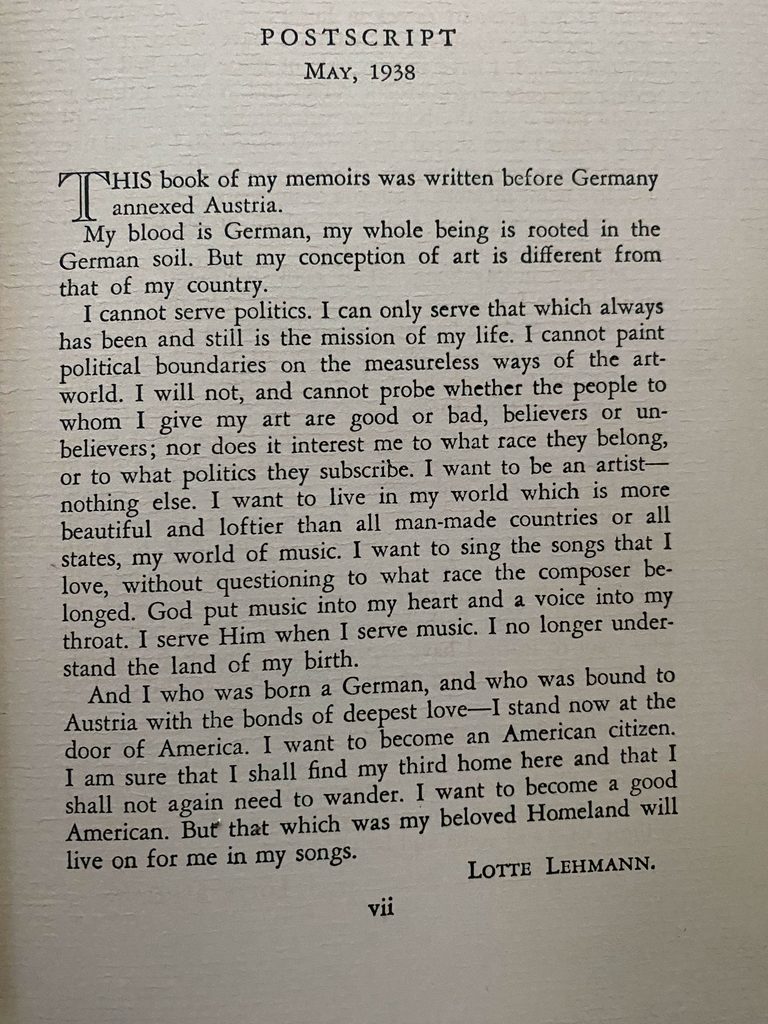
Summer 1938 LL wrote the Postscript for her autobiography, Midway in my Song
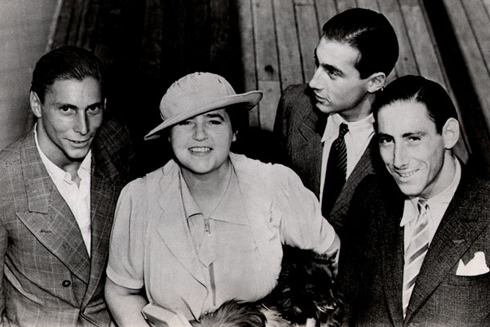
Jun 1938 Photo of LL with stepsons at the Grand Hotel, Cap Martin, on the French Riviera in the July 1938 issue of Musical America
June 1938 Otto and Manon travel to NY
late June 1938 Otto and Manon arrive in NY and travel immediately to the sanatorium at Saranak Lake
5 Aug 1938 New York Times article states that LL “sailed from Havre for New York yesterday aboard the liner Champlain.” Mentions LL’s quest to become “a real American citizen.”
13 Aug 1938 NewYorkTimes states that LL arrived at Saranac Lake on 12 Aug to visit her ill husband, accompanied by Peter and Hans Krause while Ludwig remained in NYC.
Dealing with Family
Beaumont Glass reports: “The doctors in Davos reported that he [Otto] had tuberculosis and that the treatment he had received in Austria had been completely wrong for him. That news, on top of the troubles of his children and the financial crash in Vienna, was devastating to Otto, and, of course, to Lotte too.”
Lehmann’s focus was thus on Otto and the stepchildren, the latter who were in immediate peril. Though their father was Catholic, his first wife’s family were Jewish and thus the children were, under the newly enforced Nuremberg Laws in annexed Ayustria, classified as non-aryan Mischlinge and thus targets of the regime.
The New York Times reported the story of the boys’ escape from Austria that included avoiding the Gestapo guards by slipping out of Vienna under the pretense of visiting their ailing father in Davos. On 13 May 1938 they left Switzerland, boarding the Orient Express to Paris.
Following their emotional reunion in Paris on 14 May 1938, Lehmann moved to Cap Martin in the south of France with the boys. Here’s excerpts from a letter Lehmann wrote to Frances: “I met the children in Paris, though not so cheerful as I had expected them to be. They were all a bit shaken by what they had gone through. Even Manon had become very quiet. I knew now that Otto would be very much relieved, and that was a great relief to me. We all went together to Davos [Switzerland]. There is something strangely uncanny in the air there! It is not the altitude alone; there are supposed to be certain ‘earth-currents’ there which make the area so favorable for those with lung diseases. I do not think, though, that it is good for Otto, and I don’t believe he will stay. He is always very hoarse, looks tanned but miserable, so peaked and angular. I am terribly worried about him….He doesn’t want to be in a sanatorium any more, he doesn’t want to go to any more doctors. It cost me a great effort to wring from him the promise that he will consult a specialist in New York….I myself cannot take the air in Davos. It made me quite feverish. I was coughing, had a strange kind of cold, felt utterly shattered, and couldn’t sleep. I was freezing the whole time—there was deep snow up there….”
We may forget that Lehmann’s stepchildren were adults: Ludwig Otto Krause born in 1914 (23 in 1938); Manon Krause (1916-1982) (22 in 1938); Otto Hans Krause (1917-1990) (20 in 1938); Peter Krause 1919 (19 in 1938).
During that summer of 1938, while staying in France Lehmann met with her Viennese legal representative, Dr. Alois Klee, in Deauville, where Otto was being treated. Klee had been her long-term Viennese legal representative.The purpose of this meeting was not related to any attempts to persuade her to return to Nazi Germany, but rather to settle the details of her pension from the Vienna State Opera following Austria’s annexation earlier that year. Because she could not directly convert her Austrian pension into U.S. dollars, they arranged for the funds to be transferred to her mother-in-law, Betty Krause, who was living in Partenkirchen. This unusual “special treatment” arrangement successfully protected her Austrian assets for several years until the Nazi regime permanently halted the pension payments in August 1941, just months before the United States entered World War II.
While Lehmann was secluded in France, her New York based agent, Constance Hope, spent June and July orchestrating the massive publicity campaign for Lehmann’s upcoming permanent return to the States. This included booking her highly anticipated fall return to the Metropolitan Opera, “Duet Recitals” with Melchior, and the Kraft Music Hall radio show.
Beaumont Glass mentions that Lehmann sang some recitals in France and Holland at this time. I can find no references to support this.
How had Lehmann arranged visas for her stepsons? They were in the “German-Austrian” quota which was capped at roughly 27,000 per year. That quota was already oversubscribed. Lehmann drew upon her star power to convince the consulate officials that she had sufficient wealth and continued work in the U.S. to fund the stepsons’ lives there.
The story of Manon, the stepdaughter is different. She and Otto had traveled to the States to be with Lehmann for Christmas 1937. They’d returned to Europe at the beginning of February 1938, so were caught up in the Anschluss of March, trapping them behind Nazi lines. Otto had been born in Hungary, so had a Hungarian passport. Manon’s citizenship was tied entirely to her father’s legal status. When Otto left Austria in late March or early April he went directly to Davos, Switzerland for their famous sanatorium. Manon stayed in Vienna to manage the family’s apartment, pack vital items, and coordinate legal affairs of her brothers, finally leaving mid-May 1938 to meet her father in Davos. Otto and Manon left Europe in late June 1938, approximately seven weeks ahead of Lehmann and the boys. This allowed Manon to transport her father to the treatment center at Saranac Lake, NY before the others arrived in the States. Lehmann and two of her stepsons visited Otto at the sanatorium on 12 August and by 16 August she was singing on tour earning the money to pay all the accumulating bills.
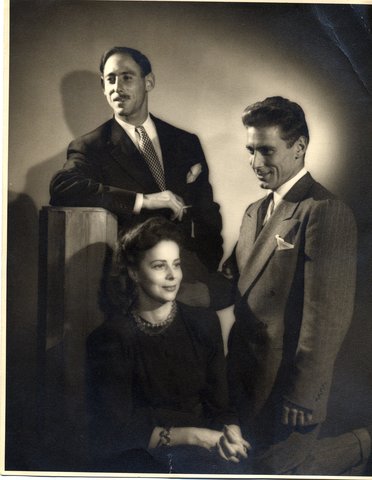
Otto’s Death
There’s a complex story revealing how an ill man, such as Otto, was allowed to enter the U.S. in 1938. While standard sick travelers facing the Nazi threat were systematically blocked by rigid public health statutes, Otto Krause’s entry was processed as a private, fully bonded diplomatic exception engineered entirely by Lehmann’s financial guarantees and high-level social capital. Otto also travelled with Manon, and under the arranged public-charge and hospital-to-hospital transit bonds engineered by Lehmann, he was met directly by medical transport and transferred immediately to the Trudeau Sanatorium at Saranac Lake.
Dr. Kater writes of Otto’s stay in Saranak Lake as follows: “…he felt emasculated, knew no English, hated the American food, was not the book-reading kind, and was without his beloved horses….Lotte…could be with him only sporadically because of that dire need for money, provided chiefly by her touring, always with her…maid in tow.”
Lehmann needed to sing her recital tour and opera performances to earn enough to pay all the outstanding bills.
16 Aug 1938 LL in Recital: Fine Arts Center Theatre (now the Colorado Springs Fine Arts Center), Colorado College, Colorado Springs, Colorado; unverified/possibly cancelled
20 Aug 1938 LL in Concert: Santa Barbara County Bowl, (now the Santa Barbara Bowl), for the Santa Barbara Summer Festival Series; Santa Barbara, CA; “Symphony orchestra from Los Angeles,” perhaps LA Philharmonic; Isaac Van Grove, cond.; Wagner: Dich teure Halle; Elsa’s Dream; Strauss: Morgen; Cäcilie; with piano played by Van Grove: Schubert: An die Musik; Brahms: Wiegenlied
31 Aug 1938 LL in Concert: Emil Blatz Temple of Music (Washington Park); Milwaukee, WI; Jerzy Bojanowski, cond., Wisconsin Symphony Orchestra; Fidelio: Abscheulicher, wo eilst Du hin? Komm’ Hoffnung; Schubert, (orchestrated by Bojanowski): Der Erlkönig; Brahms: Wiegenlied; Schubert: Ständchen; Strauss: Zueignung
2 Sep 1938 LL: Concert: Hollywood Bowl, Los Angeles, CA; Fidelio: Abscheulicher, wo eilst Du hin? Komm’ Hoffnung; Strauss: Heimlich Aufforderung; Zueignung; Otto Klemperer, cond., Los Angeles Philharmonic
8 Sept 1938 LL: Radio Broadcast (WEAF); Kraft Phoenix Cheese Hour or The Kraft Music Hall; contents unknown
2 Oct 1938 LL: Radio Broadcast; RCA Magic Key; Thomas: Mignon: Connais tu le pays (perhaps in German as Kennst du das Land); Strauss: Cäcilie; Schumann or Wolf: Er ist’s; Black, cond., NBC Orchestra
10 Oct 1938 LL: Recital: Syria Mosque, Pittsburgh, PA; Paul Ulanowsky, piano; Schumann: Frauenliebe und -leben; Schubert: Der Erlkönig; Wolf: Gesang Weylas
13 Oct 1938 LL: Recital: Alumnae Hall, Wellesley College, Wellesley, Mass.; probably Paul Ulanowsky, piano; Schubert, Schumann, Brahms, Wolf.
18 Oct 1938 LL: Recital: Town Hall; Paul Ulanowsky, piano; Schumann: Brautlieder; Alte Laute; Provincialisches Lied; Frühlingsnacht; Brahms: Feinsliebchen…; Da unten im Tale; Schwesterlein; Mein Mädel hat einen Rosenmund; Strauss: Im Spätboot; Kling; Schubert: Der Wegweiser; Die Krähe; Das Wirsthaus; Die Post; encores; An die Musik; Ungeduld
20 Oct 1938 New York Times: mentions that LL took a suite in Hotel Croydon at 12 East 86th St., NYC, NY
30 Oct 1938 LL: Joint Recital (with Melchior); Symphony Hall, Inaugural Show of the Celebrity Series, Boston, MA; Paul Ulanowsky, piano; Sold Out all 2,500 seats; LL encores: Schubert: An die Musik; Schumann: Du bist wie eine Blume; joint encores: Schumann: Unter’m Fenster; for the duets PU joined Melchior’s pianist Ignace Strasfogel in four-hand arrangements of the Schumann duets.
3 Nov 1938 Book Signing at Strawbridge & Clothier Book Store, Philadelphia, PA; LL’s Midway in My Song
4, 5 Nov 1938 LL: Joint Recital with Melchior: Philadelphia Academy of Music, Philadelphia, PA; LM and LL”…presented their personal contributions for the Philadelphia Orchestra Maintenance Fund,” Philadelphia Record, 5 Nov 1938
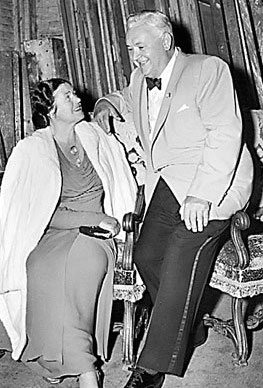
10 Nov 1938 LL: Joint Recital (with Melchior): Fair Park Auditorium, Dallas, TX
13 Nov 1938 LL: Recital: The Barbara Woods Morgan Memorial Concert, Vassar College; Poughkeepsie, NY; Paul Ulanowsky, piano; Schubert: An die Leier; Im Abendrot; Der Erlkönig; Schumann: Der Nussbaum; Aufträge; Brahms: Der Tod…; Das Mädchen spricht; Wolf: Verborgenheit; Der Knabe…; Ich hab‘ in Penna…; Strauss: Allerseelen; Ständchen; Zueignung; encores: Schubert: Ständchen; Schumann: An den Sonnenschein; Worth: Midsummer. “Lehmann donated her services…”
18 Nov 1938 LL: Concert; Eastman Theater of the University of Rochester, Rochester, NY; Beethoven: Freudvoll und Leidvoll; Fidelio: Abscheulicher! wo eilst du hin? Komm’ Hoffnung; Wagner: Schmerzen; Träume; Tristan und Isolde: Liebestod; José Iturbi, cond., Rochester Philharmonic
21 Nov 1938 LL: Bagby Concert; (with Lauritz Melchior); Waldorf Astoria, NY; Paul Ulanowsky, piano; Schubert: Du bist die Ruh’; Brahms: Meine Liebe ist grün; Duets: Schumann: Ich denke dein; Er und Sie; Unter’m Fenster; Artur Rubinstein was the other soloist.
22 Nov 1938 Der Rosenkavalier; LL, Marschallin; Risë Stevens, Octavian (debut); List, Ochs; Farell, Sophie; Schorr, Faninal; Bodanzky, cond., Metropolitan Opera in Philadelphia
26 Nov 1938 Lohengrin; LL, Elsa; John Gurney, King Heinrich; Melchior, Lohengrin; Julius Huehn, Telramund; Dorothee Manski, Ortrud; Erich Leinsdorf, cond., Metropolitan Opera
1 Dec 1938 Tannhäuser; LL, Elisabeth; List, Hermann; Carl Hartmann, Tannhäuser; Hans Hermann Nissen, Wolfram; Thorborg, Venus; Leinsdorf, cond., Metropolitan Opera
6 Dec 1938 Book Signing; William H. Block Company, Indianapolis, IN; LL’s Midway in My Song
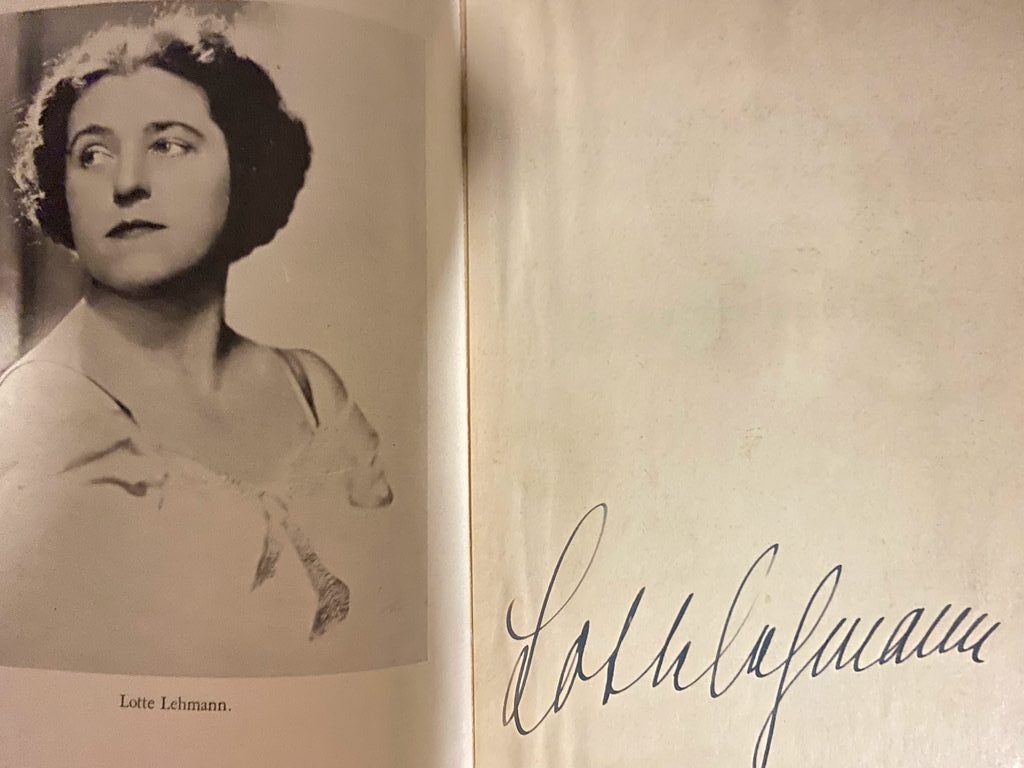
7 Dec 1938 LL: Recital: Iowa Union (now Iowa Memorial Union), Cornell College, Iowa City, Iowa; Paul Ulanowsky, piano; Schumann, Schubert, Brahms, Wolf, Marx, and Strauss
9, 10 Dec 1938 LL: Concert: Municipal Auditorium, St. Louis, Missouri; Fidelio: Abscheulicher….; Marriage of Figaro, aria; Strauss: Allerseelen; Zueignung; encore: Strauss: Wiegenlied; Wagner: Tristan und Isolde: Liebestod; encore: Brahms: Wiegenlied; Vladimir Golschmann, cond., St. Louis Symphony Orchestra,
12 Dec 1938 LL: Concert: Springfield Knights of Columbus Hall; Decatur, Illinois; Paul Ulanowsky, piano; Schumann: Der Nussbaum; Aufträge; Frauenliebe und -leben excerpts; Schubert: An die Musik; Im Abendrot; Der Erlkönig; Brahms: O liebliche Wangen; Von ewiger Liebe; Wolf: Verborgenheit; Gesang Weylas; Strauss: Morgen; Ständchen
13 Dec 1938 LL: Recital: Clara Thompson Hall, Drury College, Springfield, MO; Paul Ulanowsky, piano; Partial program: Schubert: Der Erlkönig; Schumann: Widmung; Wagner: Träume; the Springfield Leader and Press noted that the audience was particularly moved by her performance of “Träume”; the review also mentions that she performed a “generous group of Schubert,” though it does not name every title.
16, 17 Dec 1938 LL: Concert: Syria Mosque; Pittsburgh, PA; Strauss: Allerseelen, Wiegenlied; Zueignung; Wolf: Verborgenheit; Anacreons Grab, Gesang Weylas, Er ist’s; encores: Strauss: Morgen; Ständchen; Fritz Reiner, cond.. Pittsburgh Symphony
19 Dec 1938 Der Rosenkavalier; LL, Marschallin; List, Ochs; Risë Stevens, Octavian; Schorr, Faninal; Farell, Sophie; Bodanzky, cond., Metropolitan Opera
20 Dec 1938 New York Times: “[LL] was extolled…at a dinner in her honor at the Hotel Astor as a symbol of the cultural contribution brought to this country by refugees from Nazi persecution. The dinner was given by the American Committee for Christian German Refugees, which announced the start of a campaign for $150,000 to meet the present emergency in the refugee problem.” Others who spoke included Chancellor Harry Woodburn Chase of NYU; Dr. Walter Damrosch and Fannie Hurst. “The program closed with a concert by Mischa Levitzki, [Gladys Swarthout], Lawrence Tibbett and Mme Lehmann.” LL sang: Schumann: Widmung; Schubert: Ständchen; Wolf: In den Schatten meiner Locken; Brahms: Botschaft; PU, piano
Into 1939
1 Jan 1939 New York Times: portrait of LL with caption that she would be heard on the Saturday Met broadcast of Der Rosenkavalier.
6 Jan 1939 LL: Recording in New York with Paul Ulanowsky, piano
7 Jan 1939 Der Rosenkavalier; LL, Marschallin; same cast as 22 Nov 1938
13 Jan 1939 LL: Recital: Hoyt Sherman Place Auditorium; Des Moines, Iowa; Arias from Rinaldo, Mignon, Lohengrin, Tosca; songs by Wilson, Hinton, Balogh, Rogers, Hageman; Lieder by Schumann, Brahms, Mendelssohn, Wolf, and Strauss. Des Moines Register critic Clifford Bloom wrote: “We venture to express the hope that Des Moines may soon again hear Lotte Lehmann–-the next time in an all-Lieder program.”
16 Jan 1939 LL: Recital: Provo Tabernacle (now the Provo City Center Temple), Provo, Utah; Paul Ulanowsky, piano; Partial program: Schumann: Widmung; Schubert: Ständchen; Wolf: In dem Schatten…; Brahms: Botschaft; “extremely gracious with her encores, Mme Lehmann returned again and again to the stage as the packed hall paid her increasing tribute. And with a tinkling melody ‘Gute Nacht, mein Knabe’ she concluded.” [reference to last words of Brahms: Vergebliches Ständchen]
19 Jan 1939 LL: Recital: Fox Theatre, Spokane, WA; Paul Ulanowsky, piano; Gluck: O del mio dolce ardor; Mozart: Das Veilchen; Warnung; Schubert: Der Wanderer; Lachen und Weinen; Die Forelle; Der Erlkönig; Schumann: Widmung; Frühlingsnacht; Die Kartenlegerin; Brahms: Botschaft; Wiegenlied; Wolf: In dem Schatten…; Storchenbotschaft; Hageman: At the Well; Tipton: Crying of Water; Worth: Midsummer
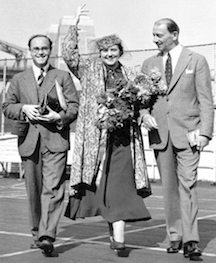
22 Jan 1939 LL cuts short her Western concert tour; the train waits at Fargo ND station for her while she phones the hospital to ask about her husband’s condition.
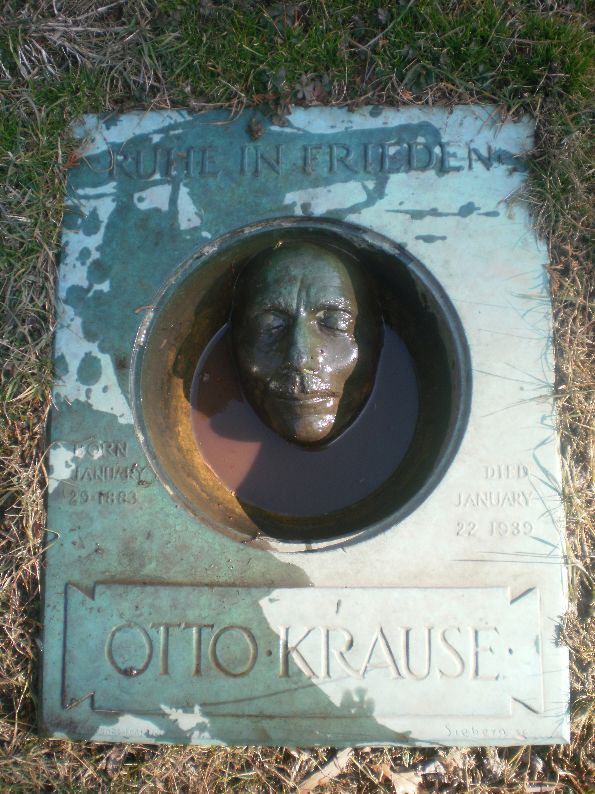
23 Jan 1939 Otto Krause, husband of LL, dies of TB before LL could reach his bedside. LL attempted to charter lines at both Fargo ND and Chicago to hurry her East but was balked at both places by weather… New York Times: “…She is scheduled to sing Rosenkavalier Wednesday and Tannhäuser on Saturday.” These obviously were cancelled.
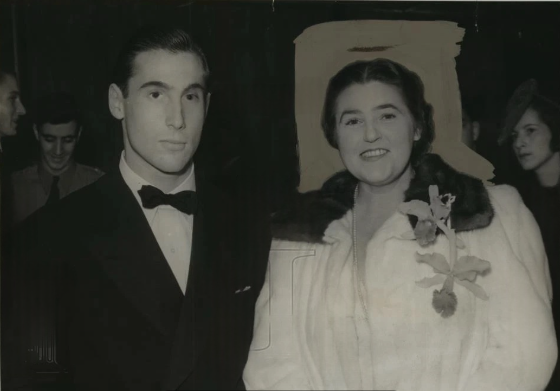
Here’s what happened with Lehmann’s stepchildren. In Glass’s words: “At first it was necessary to find temporary housing for the ‘children,’ since the apartment that had been rented for Lotte in New York was too small. They were farmed out among the fans. Frances generously took on two of them. Then Lotte helped to find them jobs; through her connections and thanks to some influential admirers, Pucki was able to work for NBC and Peter for Agfa. Hans had always wanted to be a pilot. Lotte arranged for him to have flying lessons on the West Coast, and he was guaranteed a position after three months’ training. She even made the down payments on cars for two of the young men.”
Lehmann wrote a revealing letter to Else Walter (Bruno Walter’s wife): “Heaven knows it was not easy to find jobs for the children, you can believe me. America is not in a rosy condition, economically, as you well know….
“Being a mother is exhausting me. Singing is child’s play compared to that. How one underestimates it, when one has not experienced it! Worry over the children has nearly finished me. But now I am relieved that they are taken care of for the present.
“I waited until the end to tell you about Otto… Oh, Else, he is so frightfully sick. The doctors say he will get better. I can hardly believe that, when I look at him. He is the shadow of himself, so enervated, wretched, and weak. He has been lying in bed for eighteen weeks already. He still has to stay in bed for months. Imagine that. He is pitifully thin, there is always some fever, even though the terrible spitting of blood has stopped….He never wanted to believe he was sick. He was always vain about his health, proud of being a dashing, good-looking man….Both of his lungs are infected, though he does not know that yet….It is very hard for both of us that I can only be with him so seldom. I love him so much—never was I nearer to him than now, when he is so miserable. I mull over in my mind what I might be able to do to make him happier. But how can I help him?”
As you can read above, Lehmann was actively touring when not performing at the Met. And she was on the West Coast when she got word that Otto was worse. Here’s how Glass describes those horrible hours: “Lotte was on tour when it happened. She was in Spokane when she heard the news that he had contracted pneumonia. Lotte immediately canceled her remaining concerts and tried to charter a plane. That was impossible, flying conditions were bad. There was a blizzard in the East. She took a train. Desperately she hoped to reach his side in time.
“At Fargo, North Dakota, she was able to persuade officials of the Great Northern Railway to delay the train for fifteen minutes while she telephoned the sanatorium at Saranac Lake.
“The doctors called for Otto’s friends to be near him….The roads were covered with ice…so Frances had to do all the driving during a long, exhausting night. First to Saranac Lake, which they reached at 4 a.m. Then to Syracuse, to meet Lotte’s train…. Giant billboards were blown from their moorings and flapped this way and that across the icy roads. From Syracuse Frances called Saranac Lake;…Otto was dead. Lotte, who had called from Toledo, had already heard the heart-breaking news. Callous photographers had actually tried to photograph her weeping. When her train reached Syracuse she cried out: ‘Peter!’ He ran into the train, to join her, and suddenly it left the station with both of them on board… For those who went through it, that was a night they would never forget.”
Though Lehmann cancelled all of her remaining Met performances, she still had her need for money and singing was still her life. But now, the emphasis was certainly on Lieder. Here are the dates that followed Otto’s death.
30 Jan 1939 LL: Recording in New York with Melchior (the first time that Lehmann sang after Otto’s death)
1 Feb 1939 LL: Recital: John M. Greene Hall; Smith College, Northampton, MA; Paul Ulanowsky, piano
6 Feb 1939 LL: Recital: Bushnell Memorial Hall, Hartford, CT; Paul Ulanowsky, piano; Gluck: O del mio dolce ardor; Mozart: Dans un bois solitaire; Warnung; Schubert: An die Musik; Doppelgänger; Ständchen; Der Erlkönig; Schumann: Widmung; Die Kartenlegerin; Alte Laute; Brahms: Botschaft; Wiegenlied; Wolf: In dem Schatten…; Storchenbotschaft; Hageman: At the Well; Tipton: Crying of Water; T.H. Parker, writing for the Hartford Courant on 7 February 1939, noted that despite the recent personal tragedy, Lehmann’s performance of “Der Erlkönig” was “shattering” in its dramatic intensity. He also highlighted the audience’s warmth, describing a “prolonged ovation” after the opening Gluck.
10 Feb 1939 LL: Recital: Woman’s College Auditorium, (Furman University), Greenville, SC; Paul Ulanowsky, piano; same program as 6 February.
15 Feb 1939 LL: Recital: Academy of Music, Philadelphia, PA; Paul Ulanowsky, piano
20 Feb 1939 LL: Recital: St. Paul Church, Lincoln, Nebraska; Paul Ulanowsky, piano; Handel: Rinaldo: Lascia ch’io pianga; Lohengrin: Elsa’s Dream; Monro: My lovely Celia; Hinton: Cradle song; Balogh: Within my heart; Rogers: The star; Hageman: At the well; Thomas: Mignon: Connais-tu le pays?; Tosca: Vissi d’arte; Schumann: Widmung; Brahms: O liebliche Wangen; added: Vergebliches Ständchen; Mendelssohn: Auf Flügeln des Gesanges; Wolf: Verborgenheit; Strauss: Ständchen; encore: Schubert: Der Erlkönig; encores: Worth: Midsummer; Reger: Virgin’s Slumber Song; [the Mignon and Tosca arias perhaps sung in German]
23 Feb 1939 LL: Recital: Oklahoma College for Women Auditorium, (now part of the University of Science and Arts of Oklahoma), Chickasha, OK; Paul Ulanowsky, piano
6 Mar 1939 LL: Recital: McKinley Auditorium, Honolulu, Hawaii; Paul Ulanowsky, piano; Handel: Lascia ch’io pianga; Wagner: Dich teure Halle; Old English: My lovely Celia; Carpenter: The Sleep…; Balogh: Deep in the Heart of Mine; Rogers: The star; Hageman: At the well; Thomas: Connai-tu…; Puccini: Vissi d’arte; Schubert: Gretchen am Spinnrade; Mendelssohn: Auf Flügeln…; Wolf: Verborgenheit; Brahms: Wiegenlied; Strauss: Ständchen; [LL arrived by ship at 9am, sang this recital at 5pm, and left on the ship headed for Australia at 9pm.]
21 Mar 1939 LL Arrives in Sydney (with her pianist Paul Ulanowsky)
23 Mar 1939 LL: Concert: Town Hall; Sydney; Antal Dorati, cond., Sydney Symphony Orchestra; Fidelio aria; Wagner: Dich, teure Halle; Du bist der Lenz; Strauss: Marschallin’s monolog, Da geht er hin
25 Mar 1939 LL: Recital: Town Hall; Sydney; Paul Ulanowsky, piano; [all Australian appearances broadcast by the Australian Broadcasting Commission]; in this first recital LL spoke of her husband’s recent death: “Fate has not been kind to me…I have lost much in the death of my husband, but coming back to you has shown me how much I have in my life…But this evening, already, you have taught me to smile again. I shall sing ‘To the Sunshine’ [An den Sonnenschein] by Schumann.” Handel: Rinaldo: Lascia ch’io pianga; Beethoven: In questa tomba oscurra; Ich liebe dich; Freudvoll und leidvoll; Wolf: An die geliebte; Frühling über’s Jahr; Auf ein altes Bild; Der Knabe und das Immlein; Thomas: Mignon: “Knowest thou the Land?” (probably sung in English or German…Kennst du das Land?); Franco Alfano: Risurrezione: aria; Munro: My lovely Celia; Old English: The Plague of Love; W. G. James (an Australian composer who used LL’s words written on her previous tour): Covent Garden; Hageman: At the Well; encore: Brahms: Vergebliches Ständchen; other possible encores: Puccini: Tosca: Vissi d’arte; Arne; Schubert: Ständchen; Der Erlkönig (a total of seven encores were given)
28 Mar 1939 LL: “Second” Recital: Town Hall; Sydney; Paul Ulanowsky, piano; Trad.: Drink to me only; Londondery Air; Wolf: Verborgenheit; Strauss: Morgen; Ständchen; Schubert: Was ist Sylvia?; Liebesbotschaft; Schumann: Schöne Wiege meiner Leiden; Er ist’s; Tchaikowsky: Eugen Onegin: Letter aria; Hinton: Cradle Song; Charles: When I have sung my songs; Hageman: The cunning little thing; Wolf: Verborgenheit; Auch kleine Dinge; Strauss: Morgen; Ständchen; “the best of numerous encores were Schumann’s Widmung and Brahms’ Wiegenlied”
At one point on this Australian tour Lehmann sang Schumann’s Frauenliebe und -leben and broke down in the last song: (“Nun hast du mir den ersten Schmerz getan” / “Now you have caused me my first pain”) which deals explicitly with a woman mourning her husband’s sudden death. After the cycle, Lehmann spoke to the audience, revealing the recent death of her husband. Evidently the audience was touched and appreciative of Lehmann’s sharing this most private part of her life.
Days after Lehmann’s first Australian performance of Frauenliebe und -leben an Australian newspaper’s critic, Alice Brown wrote: “One…can only suspect the heavy emotional strain under which she [Lehmann] has had to sing during this tour. Those who saw the tears catch the light as they all knew what it meant for her to sing the last lines in the Frauenliebe und -leben—‘now hast thou turned my joys to bitterest pain.’ In this she was not a singer assuming the role in the song, but the woman herself.”
I have drawn from the following books:
- Five Operas and Richard Strauss, Lotte Lehmann; (translated by Ernst Pawel), Macmillan, New York 1964 (reprinted by Da Capo 1982)
- Midway in My Song, Lotte Lehmann; Bobbs-Merrill New York 1938 (American publication of Anfang und Aufstieg in the English translation by Margaret Ludwig) (Reprinted: Greenwood, Westport, Conn., 1970)
- Lotte Lehmann: A Life in Opera and Song, Beaumont Glass; Capra Press, Santa Barbara, 1988. A complete biography, the “official” biography. This official status allowed Glass access to original sources in the Lehmann Archives at UCSB and many interviews with Lehmann’s friend Frances Holden in Orplid where they lived. Many photos. Includes a complete discography by Gary Hickling.
- Lotte Lehmann: 1888-1976 A Centenary Biography, Alan Jefferson, Julia MacRae Books, A Division of Walker Books, London, 1988. A fairly complete biography. Since Jefferson didn’t have access to the Lehmann Archives, his book relies more on testimony of students and colleagues. Some photos, good statistical tables of Lehmann’s opera performances. An excellent discography by Floris Juynboll; doesn’t include much information on the non-commercial portion of Lehmann’s legacy.
- Never Sang for Hitler, The Life and Times of Lotte Lehmann, Dr. Michael Kater, Cambridge University Press, 2008. A thorough look at the historic context of Lehmann’s eighty-eight years. Kater doesn’t hesitate to analyze or criticize or speculate. No mere account of LL’s successes, this book tells the difficult aspects of LL’s personality and her various relationships.
- AI helped with information on the Queen Mary; chronological aspects of the Anschluss; some dates; birth dates of the step-children.