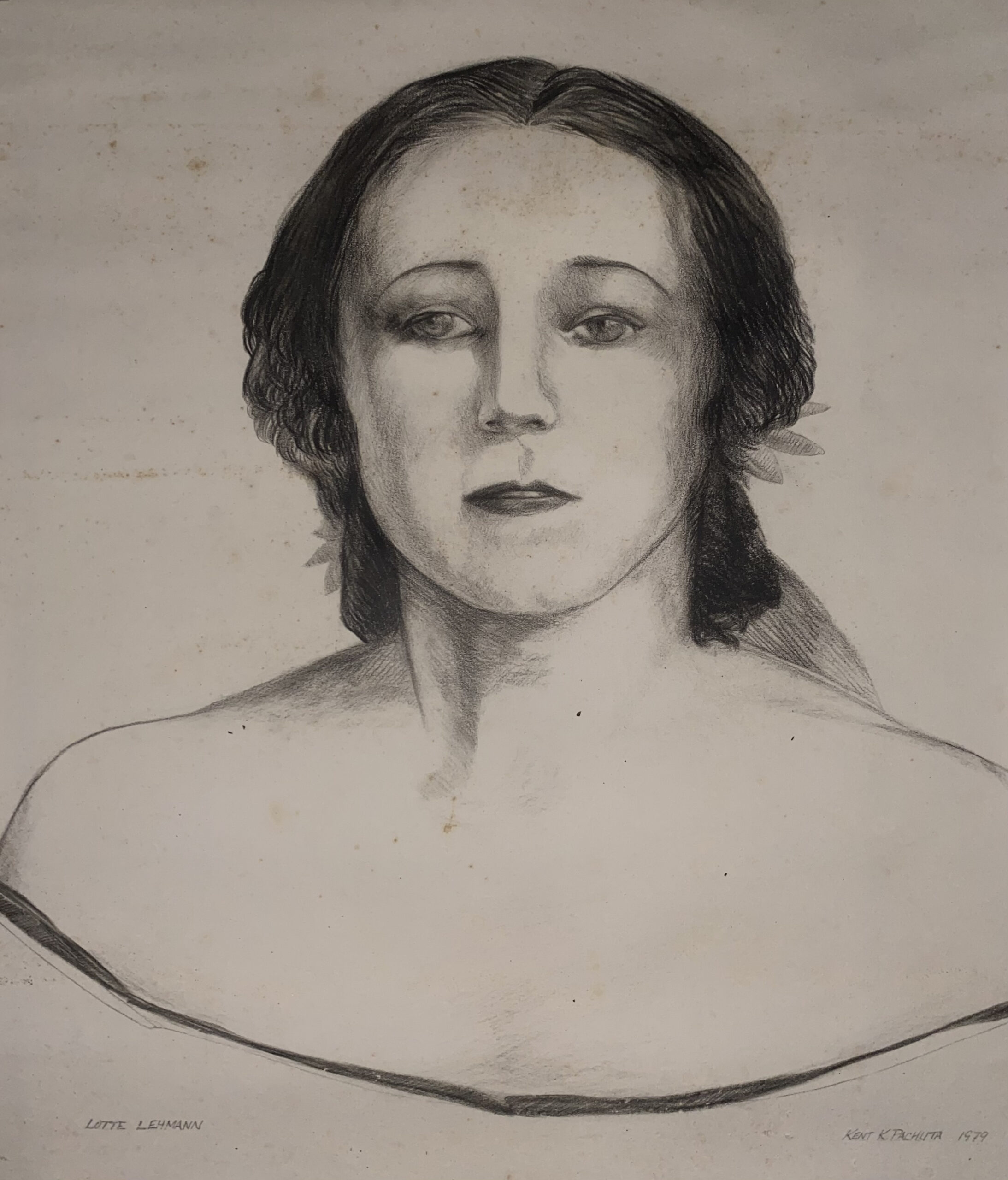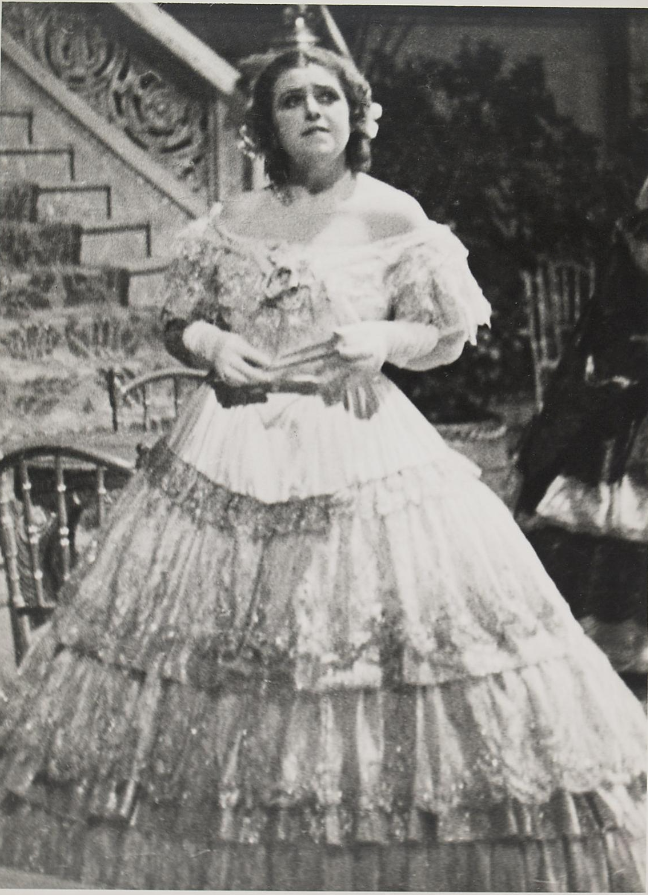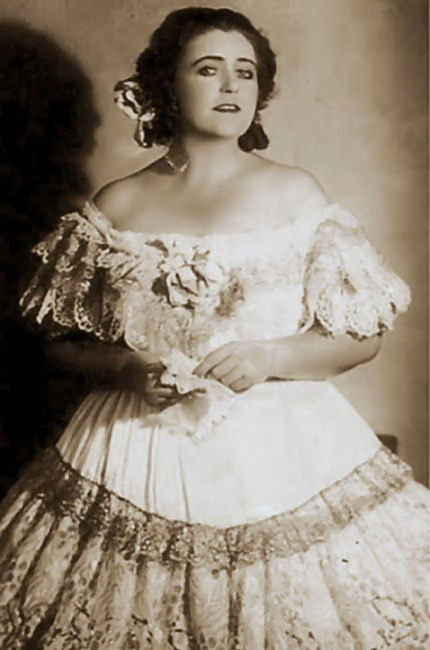
Lotte Lehmann’s entanglement with Richard Strauss’s Arabella serves as a fascinating lens into the personal rivalries and political/musical turmoil of the 1930s. The sheer brevity of her relationship with the role is shocking when compared to her career milestones of Richard Strauss operas at the Vienna Opera: while she performed the Marschallin 47 times and the Composer 35 times, she sang Arabella a mere five times.
The mystery of why Lehmann was sidelined from the July 1, 1933, Dresden world premiere is a tangled web of shifting memories, conflicting excuses, personal intrigue, political maneuvers, and musical realities. For many opera composers of the era, but especially for Strauss, Dresden was the absolute epicenter of the musical world. The Semperoper was affectionately dubbed “Strauss’s Bayreuth”; it was the historic stage where more than half of his masterworks had been unveiled to the world, including Salome, Elektra, and Der Rosenkavalier. In 1924, Lehmann herself sang at Dresden’s world premiere of Intermezzo by Strauss.
Though the music world, including Lehmann, assumed that the role of Arabella was being written for her, we’ve learned from librettist Hofmannsthal’s early (1927) letters to Strauss that he believed Lehmann was not right for the role, that “she was too mature, heavy, and too much the wife.” While Hofmannsthal’s sudden death in 1929 left the libretto’s second and third acts limited in the draft mode, it also left Strauss with sole artistic authority over the opera’s realization. Without his longtime collaborator to debate character development, the lyrical lines Strauss composed unconsciously yearned for the very warmth Hofmannsthal had sought to exclude, perfectly matching the conversational phrasing of Lehmann’s voice. This distinct phrasing is epitomized in Act I during the famous “Da geht er hin” section of Der Rosenkavalier. Where other sopranos approached the text with a strictly rigid, metronomic accuracy, Lehmann treated Strauss’s music as an elevated, poetic speech. She seamlessly blended the German consonants into a fluid, heartbeat-like rhythm, making the operatic dialogue feel like an intimate, spoken confession rather than a calculated theatrical exercise.
Lehmann threw her energy into preparing for the July world premiere in Dresden. Her letters to her friend Viola Westervelt reveal an artist ‘learning Arabella as if possessed’ and entirely enchanted by the music. But this artistic joy was destined to be short-lived. The rehearsal period quickly soured as Lehmann had to alternate the role of Arabella with Viorica Ursuleac, an arrangement overseen by Clemens Krauss, Ursuleac’s lover.
Then, in May 1933, Lehmann telegraphed Strauss cancelling her scheduled appearance in the July premiere, but hoping to postpone it until the fall. While the exact mix of politics, possible vocal fatigue, and casting rivalries behind her cancellation remains a subject of musicological debate, her withdrawal effectively ended her world premiere participation.
If exhaustion and scheduling conflicts were convenient covers, the underlying truth was far more politically charged. In my 2015 analysis for Lotte Lehmann & Her Legacy, I noted that the developing ‘Austro-German border troubles’ may have been a fabricated excuse to mask deeper anxieties, as well as Lehmann’s vocal insecurity and her fierce jealousy of Ursuleac who was assuming many of her roles in Vienna. Yet, as biographer Beaumont Glass corroborates, German politics and artistic leadership were undeniably intertwined. The world premiere may have been promised to Lehmann, but when the Nazi regime removed conductor Fritz Busch from his Dresden post, Clemens Krauss was able and willing to navigate the new regime’s conditions which included using Ursuleac.
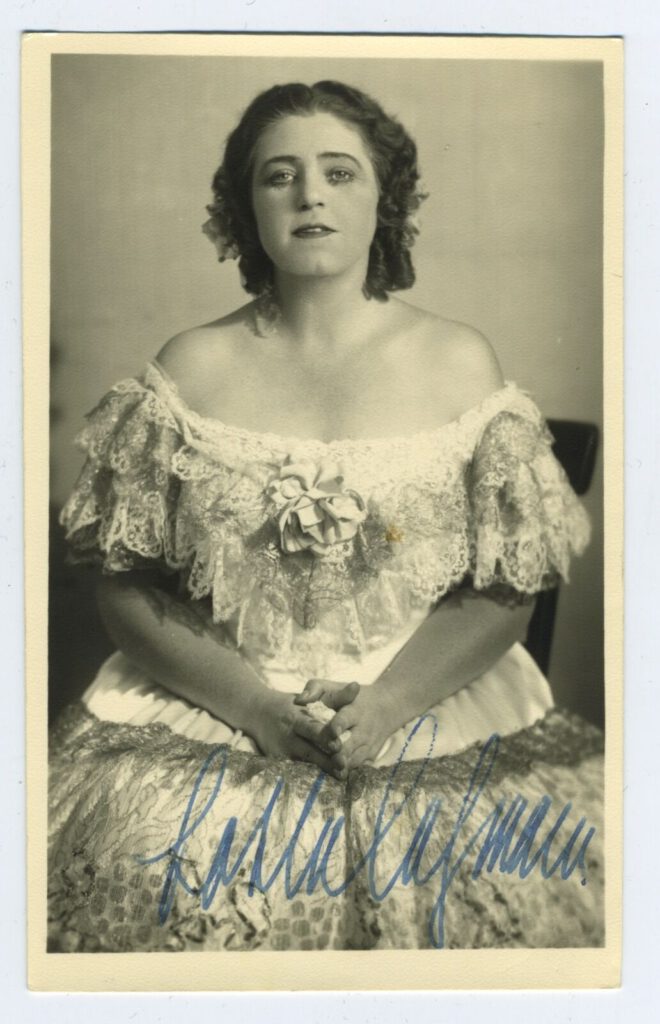
Krauss enjoyed a rare, symbiotic artistic partnership with Strauss, later even serving as the librettist for the composer’s final opera, Capriccio. He was the ultimate guardian of the ‘Strauss style’. However, Krauss was also a deeply polarizing, Janus-faced figure in the 1930s. While he was never an official member of the Nazi party, he openly flaunted Nazi sympathies and aggressively advanced his career by occupying prestigious posts vacated by anti-Nazi defectors. He maintained personal correspondence with both Hitler and Goebbels to cement his operatic monopoly. Yet, in a fascinating historical paradox, Krauss and Ursuleac simultaneously used their high-ranking privilege to covertly help at least 29 Jewish musicians escape the Third Reich. As the gossip column ‘Mephisto’s Musings’ astutely rumored in 1934, Krauss had leveraged this immense new power to require that his mistress, Ursuleac, take the title role over Lehmann.
Decades after the event, Lehmann herself seemed entirely unsure of why she didn’t sing the Arabella world premiere. Writing in her 1964 memoir, Singing with Richard Strauss, she casually mused to a curious admirer in Pasadena that she had simply ‘forgotten the reason,’ guessing she might have been in the United States or that Strauss simply preferred the younger Viorica Ursuleac. However, biographer Alan Jefferson quickly exposes the cracks in this casual forgetfulness. Pointing to her autobiographical book On Wings of Song, Jefferson notes that Lehmann initially blamed ‘over-fatigue’—a claim completely debunked by her regular (but demanding) performance schedule that season. You can view that portion of her chronolgy below to understand this possible consideration.
After Ursuleac’s success in the Dresden world premiere, Lehmann was still to sing the Vienna premiere of Arabella. But the personal rivalry was eclipsed by an even greater tragedy: on October 20, 1933—the day between the dress rehearsal and the Vienna premiere—Lehmann’s mother died.
Determined to save the performance, Lehmann chose to sing the role. In a touching letter to her friend Viola, Lehmann reflected on this transcendent, almost surreal experience: “The day before yesterday I buried my good, old mother…I loved her above everything else, and I am infinitely sad… On the 21st I had to sing the Arabella première, to save the performance. That … I was only ‘Arabella’ on the stage, and not the grieving daughter, that is the miracle through which an artist is given grace. I am happy that today I begin a strenuous concert-tour; only work is the best helper and comforter.”
This raw emotional state transfigured her performance into something legendary. Where critics of the Dresden world premiere had praised Ursuleac for a cool, aristocratic, and intellectually precise Arabella, Viennese critics rejoiced that Lehmann brought the character to life with genuine blood, passion, and vulnerability. Reviewers noted that her Arabella did not feel like a distant, pristine statue; instead, she was a real, breathing young woman navigating love and family ruin.
The performance attracted a glittering international audience. Arturo Toscanini, hearing Lehmann for the first time, was deeply moved and later told her how profoundly the evening had affected him. Meanwhile, the British author H. G. Wells famously summed up her performance in a single, invented word: “Arabellissima.”
The Viennese press was equally ecstatic, deeply moved by the emotional weight Lehmann gave to the character’s key scenes—particularly the Act I duet with her sister Zdenka and the final glass-of-water reconciliation scene. Reviewers noted that her signature vocal style, marked by an intense warmth and seamless conversational phrasing, conveyed a “yearning, touching sincerity” that salvaged the dramatic contrivances of the plot.
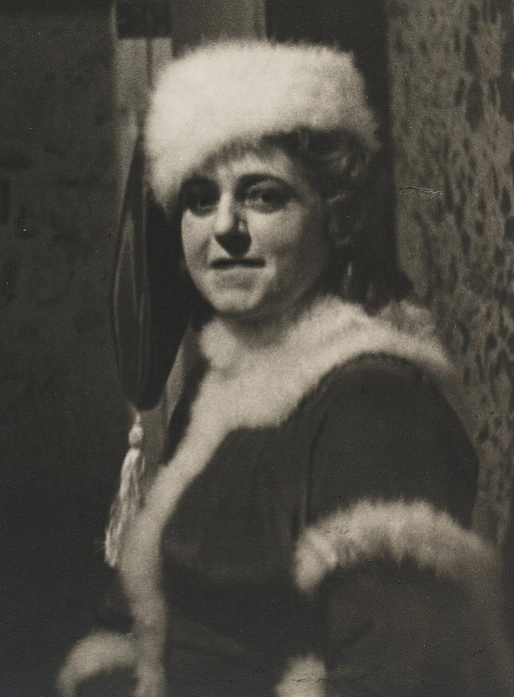
Even though Lehmann was Prussian by birth, the local press declared that she had completely internalized the Viennese soul, possessing the exact balance of charm, pride, and bittersweet melancholy required. Julius Korngold of the Neue Freie Presse—Vienna’s most influential and feared critic, who was notoriously harsh on Strauss’s later works—praised Lehmann’s unique ability to elevate the material. He observed that she bypassed the cold template of the character, stating that Lehmann gave the figure an “unusually warm, pulsing humanity” and infused the final act with a “profound, deeply felt soulfulness” that the music itself often lacked. Similarly, Heinrich Kralik of the Neues Wiener Tagblatt praised her distinct vocal style, writing that Lehmann did not merely sing the lines but “breathed life into the very fabric of the Viennese atmosphere,” calling her performance a “triumph of genuine emotion over theatrical calculation.”
The immense emotional toll of the evening, however, remained largely private. As Lehmann recalled in her memoirs: “Strauss, profoundly touched by my consent to go ahead and sing, wanted to take me out with him to the footlights at the end of the performance, but I had to refuse. I had done all I could, but I certainly did not want to be applauded for having, by the grace of God, passed a test.” Instead, Strauss stepped out alone, announcing to the roaring house that he would accept the audience’s thanks on behalf of Lotte Lehmann.
The ultimate validation came when Strauss visited her dressing room after the final curtain. According to Lehmann, deeply moved, he took her hands and confessed: “I did not know what I had written in this role until I heard you sing it.” Archival documentation confirms that immediately following the curtain call, Strauss sent her a formal message of overwhelming gratitude, praising not only her immense artistic courage but specifically lauding the profound emotional depth she brought to Arabella under such tragic circumstances. To the reviewers and the composer himself, Lehmann’s interpretation proved that she was the true spiritual owner of the role.
But neither Lehmann nor Ursuleac could help Arabella over some of the hurdles that a derivative plot and less than thrilling overall musical impression left with listeners. After a few more performances, the opera was mothballed until the late 1950s, when a new generation of singers and audiences found a greater degree of satisfaction in the work. Arabella has never eclipsed the other Vienna-based story: Der Rosenkavalier. As Lehmann herself beautifully wrote: “If Rosenkavalier is a dream of silver, Arabella is a reality of lace and velvet. In Rosenkavalier everything is heightened into the realm of the ideal—even the sadness has a heavenly shimmer. Arabella is closer to the ground, closer to the beating human heart, less sublime perhaps, but warmer in its daily breath.”
Chronology starting upon Lehmann’s return to Europe from the USA:
15 Mar 1933 Concert: Salle Gaveau; Paris
21 Mar 1933 Fidelio; LL, Leonore/Fidelio; Vienna
25 Mar 1933 Recital: Academia di Santa Cecilia, Rome
Mar 1933 Recital: Salle Prat; Marseilles
Apr 1933 Recital: Budapest; Otto Herz, piano
Apr 1933 Brahms Festival, Vienna
2 Apr 1933 Manon; LL, Manon; Vienna
4 Apr 1933 Andrea Chénier; LL, Madeleine; Vienna
7 Apr 1933 Recital: Grosser Musikverreinsaal, Vienna; Rosenek, piano; recital shared with Guy Marriner, piano (solo)
10 Apr 1933 Ariadne auf Naxos, LL, Primadonna/Ariadne; Vienna
17 Apr 1933 Die Meistersinger; LL, Eva; Vienna
20 Apr 1933 Tannhäuser; LL, Elisabeth; Vienna
25 Apr 1933 Il Tritico; LL, Georgette (Der Mantel); LL, Suor Angelica; Vienna
1 May 1933 Der Rosenkavalier; LL, Marschallin; Covent Garden
3 May 1933 Die Walküre; LL, Sieglinde, Covent Garden
4, 9 May 1933 Der Rosenkavalier; LL, Marschallinl Covent Garden
12 May 1933 Die Walküre; LL, Sieglinde; Covent Garden
14 May 1933 Concert, Théâtre des Champs-Élysées; Paris
18 May 1933 La Bohème; LL, Mimi; Vienna
20 May 1933 Ariadne auf Naxos, LL, Primadonna/Ariadne; Vienna
24 May 1933 Manon; LL, Manon; Vienna
28 May 1933 Concert: Rathaus; Vienna
29 May 1933 Recital: Augusteo, Rome
[Some time in May LL sent the telegram to Strauss withdrawing from the July premier]
30 May 1933 Joint Recital with Alfred Piccaver; Grosser Musikvereins-Saal, Vienna
4 Jun 1933 Die Meistersinger; LL, Eva; Vienna
7 Jun 1933 Tannhäuser; LL, Elisabeth; Vienna
9 Jun 1933 Joint Recital with Alfred Piccaver; Grosser Musikvereins-Saal, Vienna
11 Jun 1933 Die Walküre; LL, Sieglinde; Vienna
13, 15 Jun 1933 Die Walküre; LL, Sieglinde, Palais Garnier (Opéra de Paris)
Jun 1933 Der Rosenkavalier; LL, Marschallin (unknown city)
20 Jun 1933 Recording in Berlin
[1 Jul 1933 Premier of Arabella with Ursuleac, Dresden]
27 Aug 1933 Recital: Salzburg Festival; BW, piano; Salzburg
29 Aug 1933 Salzburg Festival; Der Rosenkavalier; LL, Marschallin; Salzburg
1 Sep 1933 Fidelio; LL, Leonore/Fidelio;l Vienna
5 Sep 1933 Der Rosenkavalier; LL, Marschallin; Vienna
8 Sep 1933 La Bohème; LL, Mimi; Vienna
14 Sep 1933 Die Walküre; LL, Sieglinde; Vienna
18 Sep 1933 Madame Butterfly; LL, Butterfly; Vienna
21-24 Sep 1933 Recording in Vienna (excerpts of Der Rosenkavalier)
25 Sep 1933 Tannhäuser; LL, Elisabeth; Vienna
29 Sep 1933 Faust; LL, Margarethe; Vienna
2 Oct 1933 Ariadne auf Naxos, LL, Primadonna/Ariadne; Vienna
7 Oct 1933 Der Rosenkavalier; LL, Marschallin; Vienna
9 Oct 1933 Manon; LL, Manon; Vienna
21, 23 Oct 1933 Strauss: Arabella; Vienna Premiere; LL, Arabella; Vienna
25 Oct 1933 Recital: Théâtre des Champs Elysées, Paris
Lehmann’s Arabella Recordings
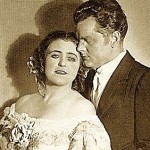
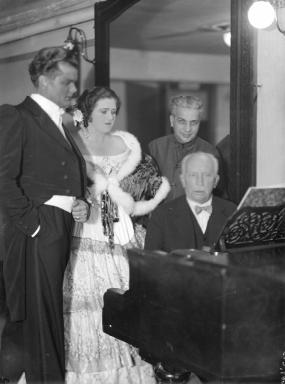
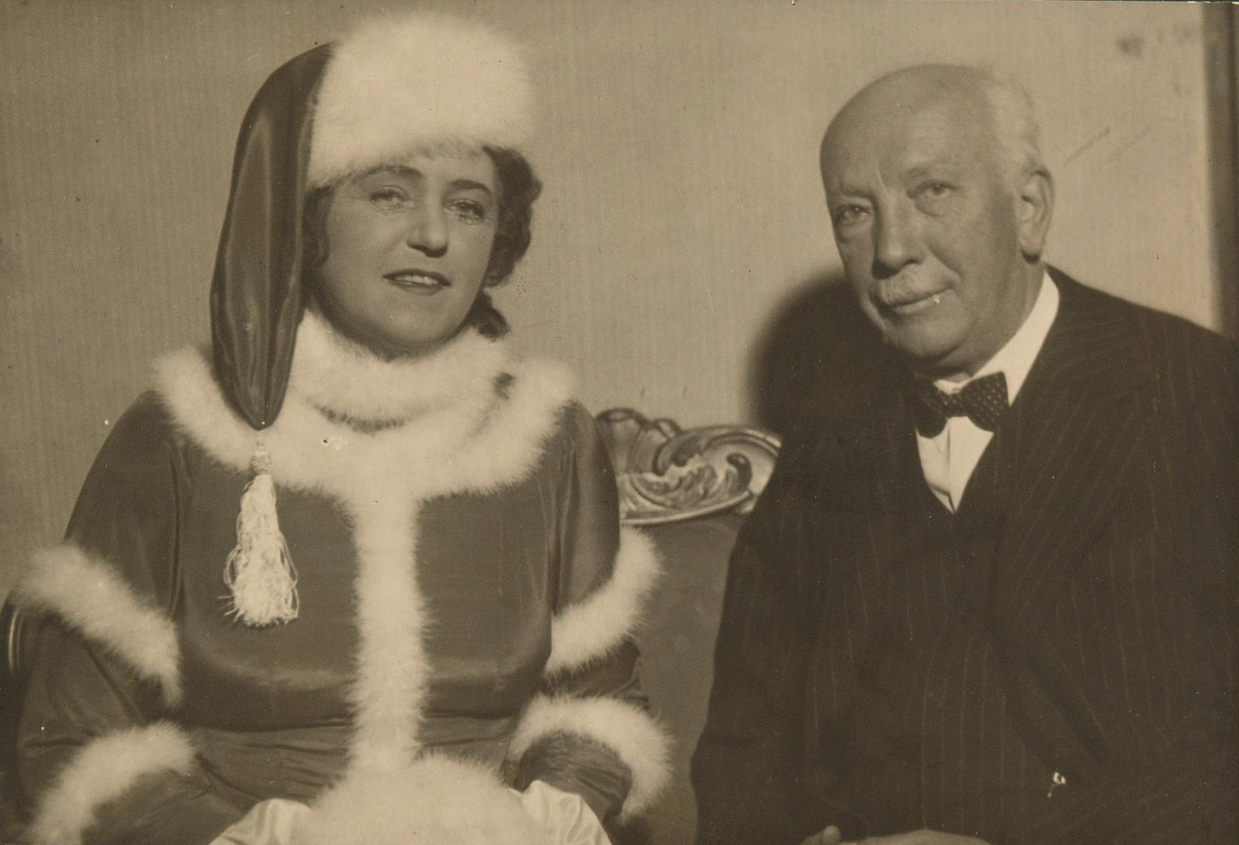
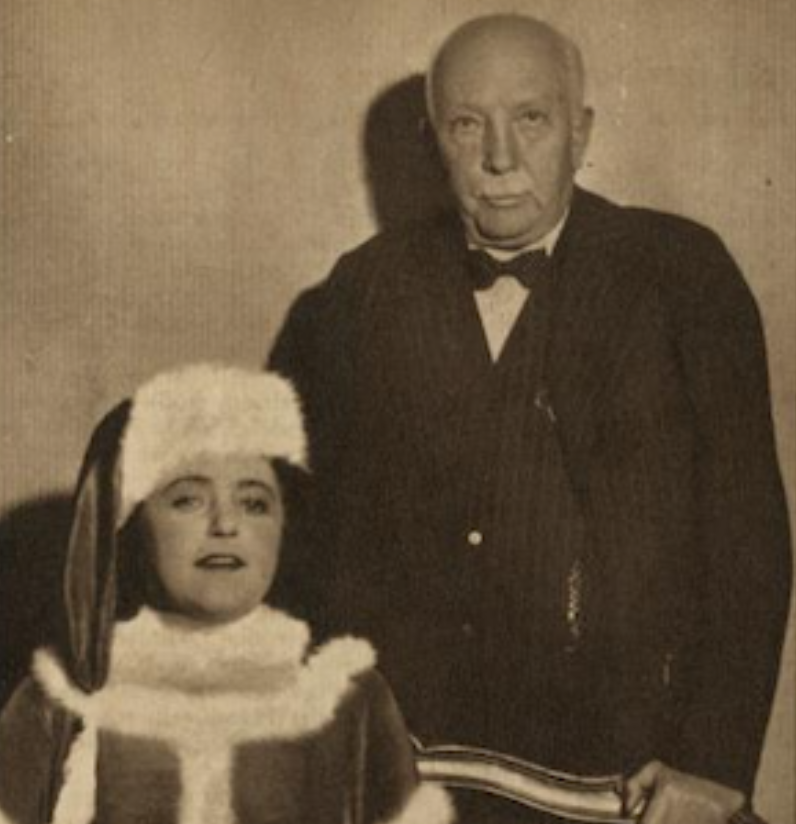
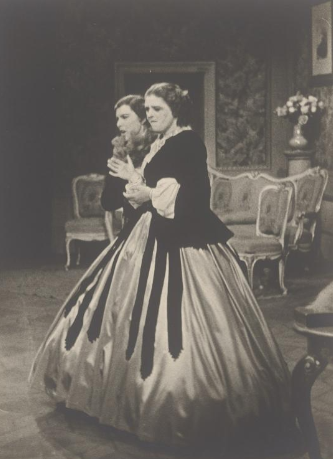
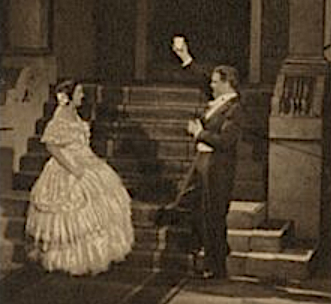
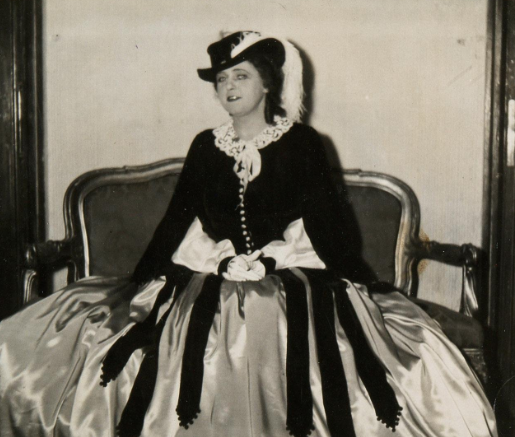
Arabella Photos
Since Lehmann only performed the role of Arabella five times (all for the Vienna Opera), we have few photos, but they include a few from live performances.