Reviews from Fanfare Magazine
I have assembled the Lotte Lehmann reviews from Fanfare’s Archive, and you’ll find a large range of opinions on Lehmann’s recordings. Here’s a sample:
“Seven words say it all: ‘a treasure trove for Lotte Lehmann fans,’ which is essentially all you need to know, keeping in mind that the point here—given the vintage of this material—is not vocal perfection, but communication through music and words at a level rarely achieved so consistently by any artist. The soprano’s particular combination of artistry and humanity was a gift to us all, even to those of us who know her only from recordings….”
Marc Mandel
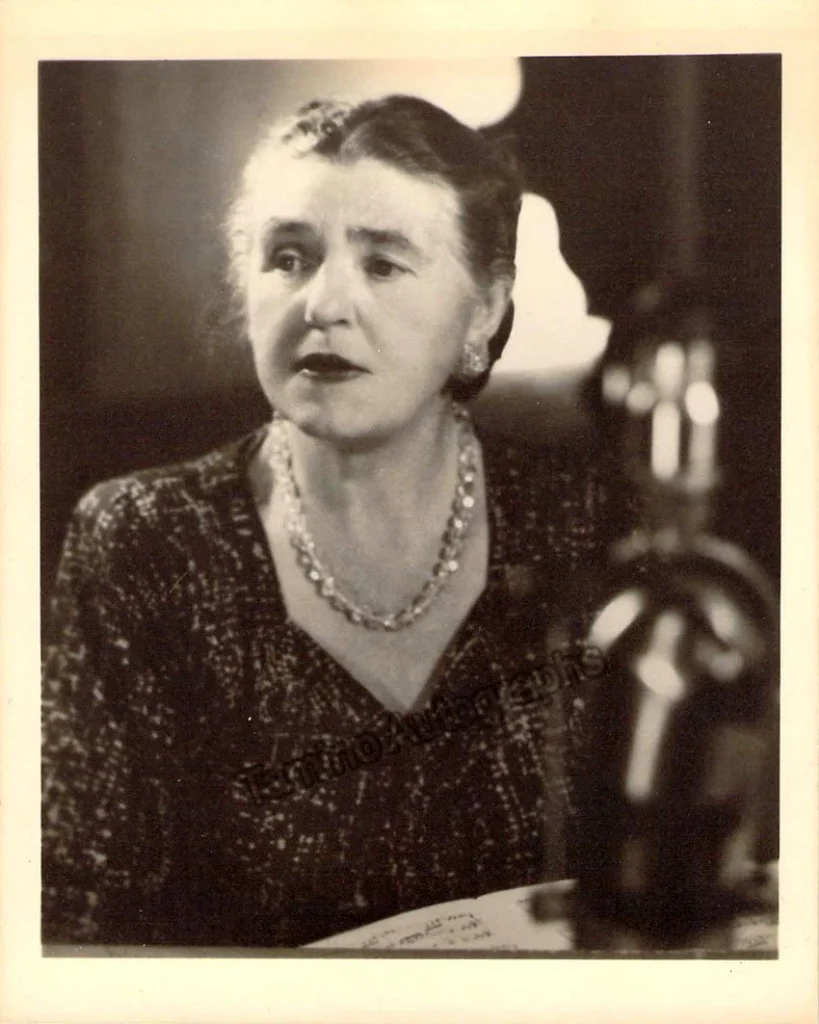
New LL Photos
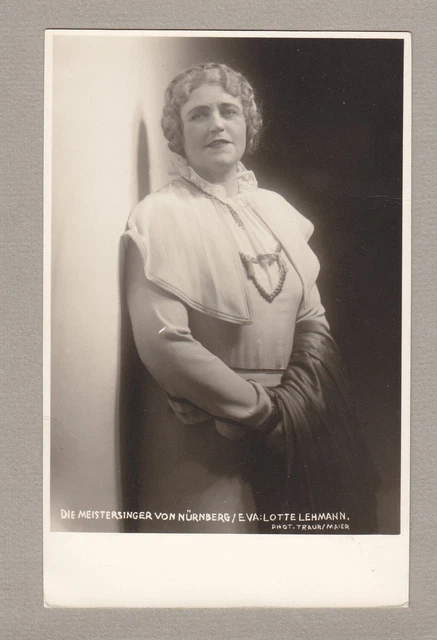
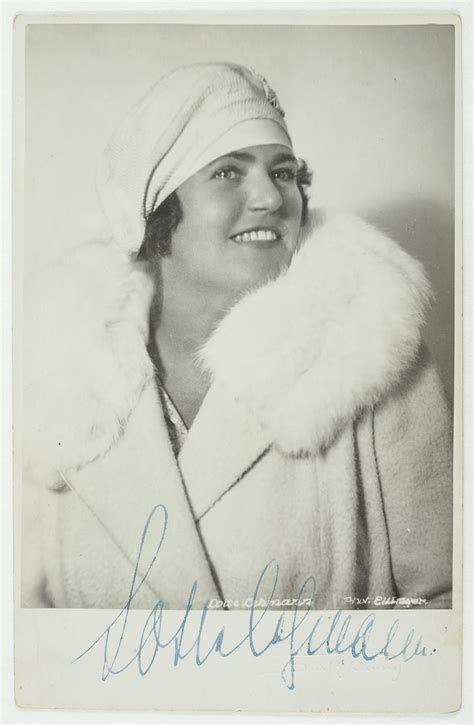
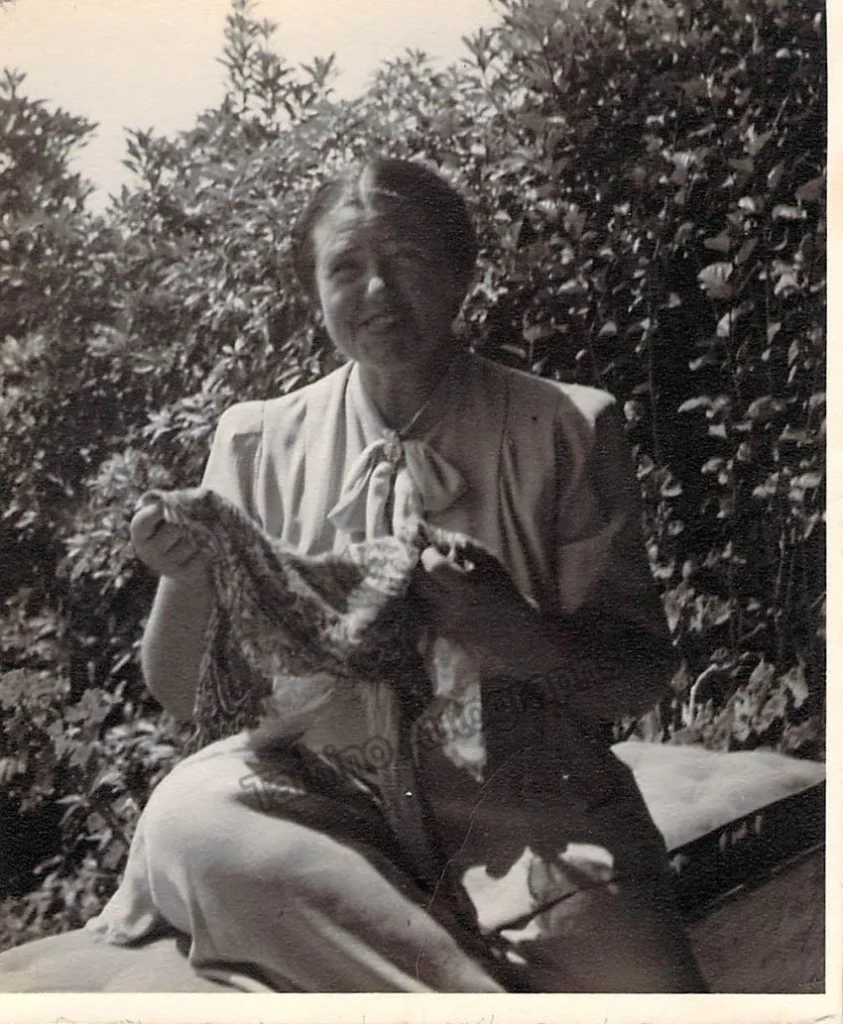
These photos seem new to our eyes. What do you think?
LL Chronology Up-date
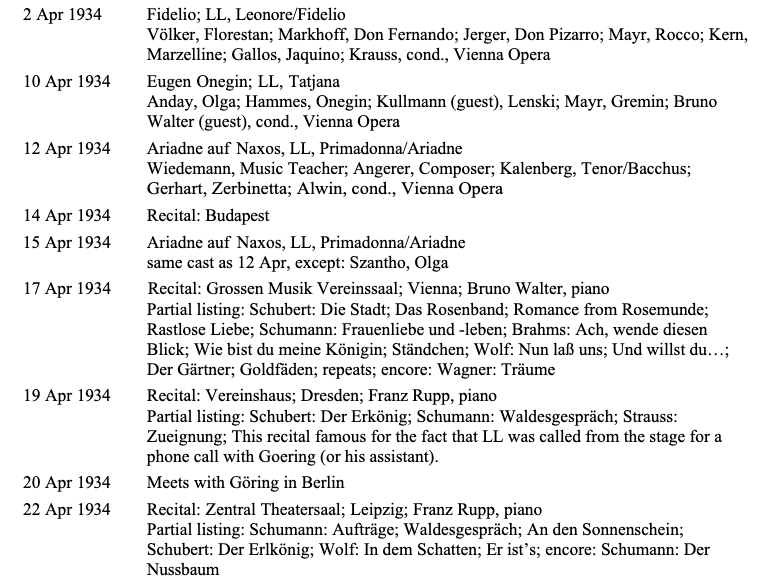
The complete LL Chronology has been revised with many new recital appearances discovered. The number of recitals, combined with Lehmann’s opera performances, sometimes seems overwhelming for one person. Here’s a screen shot of a portion of her routine in 1934.
LL Wigmore Hall Master Class
Though the Wigmore Hall Lotte Lehmann Master Classes of 1957 are available both in the iBook format and on the Lotte Lehmann League website: https://lottelehmannleague.org/2022/chapter-2-opera-master-classes/
they are also available on the OperaBuff portion of YouTube.https://www.youtube.com/watch?v=KUC0kIMlbUw
Lehmann’s impromtu spoken introduction is worth the listen!
LL in Athens
Here’s an English translation of a French-language review of Lehmann’s concerts and recitals in Athens, 29 November 1931.
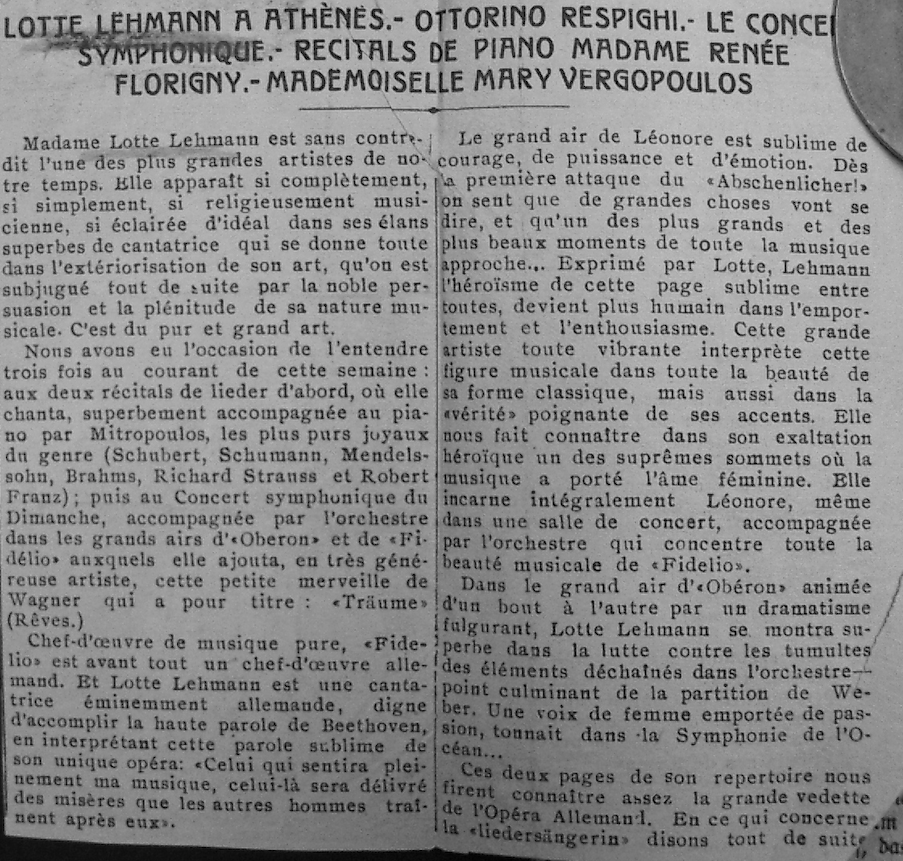
Madame Lotte Lehmann is undoubtedly one of the greatest artists of our time. She appears so completely, so simply, so deeply musical, and is so enlightened by an ideal in her superb flights as a singer who pours her whole soul into bringing her art to life, that one is instantly captivated by the noble persuasion and fullness of her musical nature. It is pure and grand art.
We had the opportunity to hear her three times during this week: first at two lieder recitals, where she sang, superbly accompanied on the piano by Mitropoulos, the most joyful [gems] of the genre (Schubert, Schumann, Mendelssohn, Brahms, Richard Strauss, and Robert Franz); then at the Symphonic Concert on Sunday, performing the grand arias from Oberon and Fidelio, to which she added, with great artistic generosity, that little marvel by Wagner entitled Träume (Dreams).
A masterpiece of pure music, Fidelio is above all a German masterpiece. And Lotte Lehmann is an eminently German singer, worthy of fulfilling the high word of Beethoven by interpreting this sublime phrase from his unique opera: “He who fully feels my music shall be delivered from the miseries that other men drag after them.”
LL’s Last Recital in Vienna
An English translation appears below.
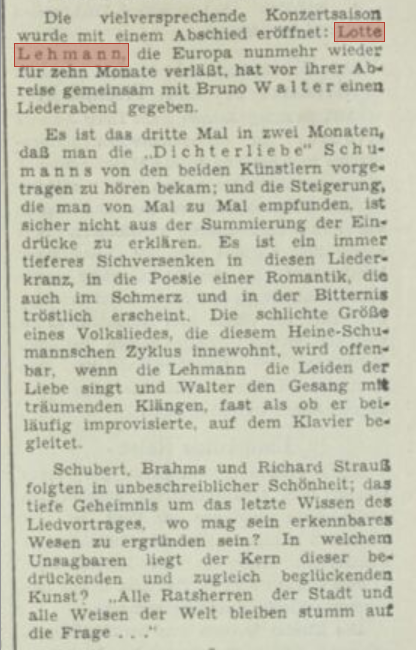
The promising concert season opened with a farewell: Lotte Lehmann, who is now leaving Europe again for ten months, gave a joint recital with Bruno Walter before her departure. [Lehmann didn’t return to Vienna until its reopening after WWII in 1955.]
It is the third time in two months that one was able to hear Schumann’s “Dichterliebe” performed by these two artists, [they had performed it in two Salzburg Festival recitals] and the intensification that one felt from one time to the next is certainly not to be explained merely by the accumulation of impressions. It is an ever deeper immersion into this song cycle, into the poetry of a Romanticism that appears consoling even in pain and bitterness. The simple grandeur of a folk song, which is inherent in this Heine-Schumann cycle, becomes apparent when Lehmann sings the sorrows of love and Walter accompanies the singing on the piano with dreaming sounds, almost as if he were casually improvising.
Schubert, Brahms, and Richard Strauss followed in indescribable beauty; the deep secret surrounding the ultimate knowledge of song interpretation—where might its recognizable essence be fathomed? In what inexpressible realm lies the core of this oppressive and at the same time blissful art? “All the city councilors of the town and all the wise men of the world remain silent on the question…” [A quote from the Brahms song, performed at this recital: Therese.]
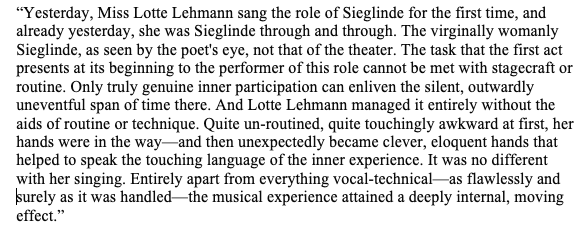
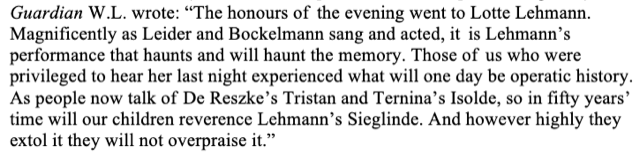
LL’s First Sieglinde
Here’s an English translation of a critic’s reaction to LL’s first appearance as Sieglinde in 1914 in Hamburg.
Reviews from Vienna Newspapers
We have discovered some reviews from the 1930s that treat Lehmann very well!
“Lotte Lehmann gave a song recital with Bruno Walter. Much has been said in abundance regarding the vocal artistry, performance, inner discipline, and spiritual content of the presentations. However, Lotte Lehmann possesses qualities beyond that which seem to be unique—just as unique as the tear that trembled in Richard Mayr’s voice. With Lotte Lehmann, it is the interplay of spiritual shades, shifting from the cheerful to the pensive, from the pensive to the melancholy, and from the melancholy to the dramatic. Even in her cheerfulness, a tone vibrates that sounds a bit in a minor key. This soft minor tinting transitions into a Beethoven-esque drama. It is feminine, yet heroic drama. Somehow, Leonore is always there. The meditative and the impulsive are united in Lotte Lehmann with rare perfection. Thus, this voice once again became a great shaper [of art]. The program included Schubert, Schumann, Brahms, Hugo Wolf and…”
“Events of world-class stature are overcrowded in Vienna even today. What Lotte Lehmann means as a lieder singer is understood here perhaps better than anywhere else, because we have followed the beginnings of such artistry, recognizing its growing maturity.
To truly grasp songs, as this woman does, requires—aside from all musical and vocal perfection,—a human greatness and, at the same time, a tenderness that can only be wrung from a life in the wide world, a life lived with the soul. That is why it is such a unique performance we are witnessing with Lotte Lehmann now—a performance that reveals all the wonders of (let us call it) romantic Germanness. [the critic is a Jew, so there’s no Deutschland über alles in his words]
Schumann, Brahms, Richard Strauss, poets from Heine to Dehmel: this is a spiritual province that, thanks to such a singer and interpreter, is now opening to the whole world, finding the most beautiful understanding everywhere. Let us not even begin to speak of Schubert, who gave his sounding voice to all of old Austria.
The course of the evening: ovations, repetitions, encores, and a farewell that was delayed again and again. It was never more beautiful. But half of such happiness came from Bruno Walter. In his piano playing, the ideal of the German Lied is reflected: symphonic texture around a melody (Symphonik um ein Melos).”
LL Film Planned
This recently discovered newspaper article from 1935 offers the “What IF?” question to the past.
Gerron to direct Lotte Lehmann film
Lotte Lehmann is now also set to star in a film. She will portray a great singer who must grapple with the conflict between her career and her private life. She tries to renounce her art to save her marriage and family happiness. However, she doesn’t quite succeed, and ultimately returns to her art. Kurt Gerron will direct the film. Negotiations with Ms. Lehmann are expected to be finalized in the coming days, with only financial details remaining to be settled. Filming is scheduled to begin in September. 1935
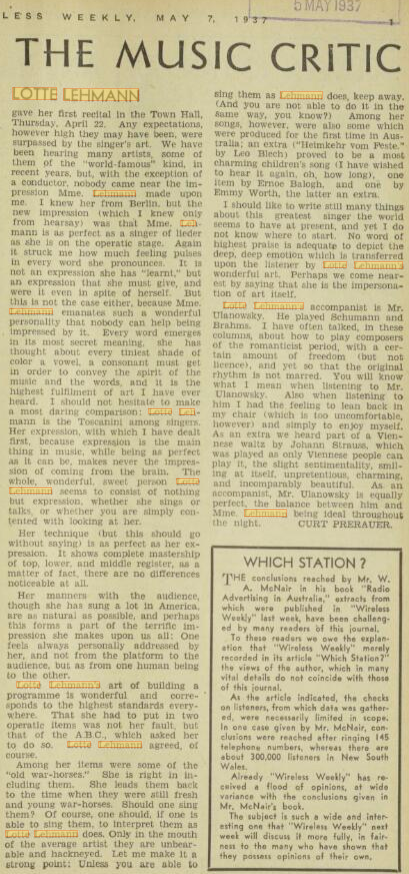
Town Hall, Australia
1935 Review